




What's Happening?
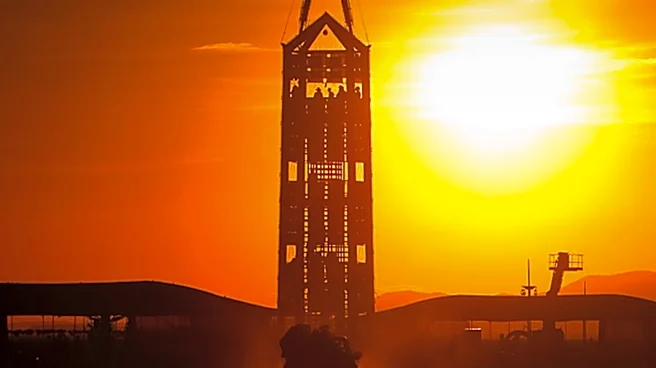
The 'Eiffela Broken Dream' sculpture, a 30-ton steel rendition of a fractured Eiffel Tower created by French artist Philippe Maindron for Burning Man 2026, was withdrawn from a planned auction. The monumental artwork, which stood 15 meters high and stretched
30 meters long in Nevada's Black Rock Desert, was initially slated for auction in Paris with a starting price of approximately $500,000. Maindron spent two years developing and fabricating the sculpture, which consists of around 5,000 metal pieces and over 10,000 numbered bolts, allowing for its modular construction, dismantling, and reassembly. The artist's decision to pull the piece from the auction was announced by the Rouillac auction house, stating that Maindron felt his 'adventure with Eiffela Broken Dream is not over and must continue,' and he wished to consider various requests and plan the distribution of eight legal prints of the original edition worldwide.
Why It's Important?
The withdrawal of 'Eiffela Broken Dream' from auction highlights the evolving dynamics of art created for temporary, experiential events like Burning Man. While many large-scale installations at the festival are designed to disappear after the event, Maindron's sculpture was poised to transition into the international art market, offering a rare 'second chapter' for a Burning Man artwork. This event underscores the increasing commercial interest in art originating from the festival, which is known for transforming the Black Rock Desert into a temporary city filled with unique installations. The artist's decision to retain control over the sculpture's future suggests a desire to explore alternative avenues for its display or distribution, potentially influencing how other Burning Man artists approach the post-festival life of their creations. It also reflects the growing recognition of Burning Man art beyond its initial context, attracting significant financial valuation.
What's Next?
Following its withdrawal from auction, the future of Philippe Maindron's 'Eiffela Broken Dream' sculpture remains uncertain. The artist intends to take time to consider various requests and plan the distribution of eight legal prints of the original edition worldwide. This suggests potential for the sculpture to be exhibited in other locations, acquired by private collectors through different means, or even become part of a public art collection. The artist's statement implies a strategic re-evaluation of the artwork's trajectory, moving away from an immediate auction sale to a more curated approach for its long-term placement and impact. This could involve further exhibitions, private sales, or even a tour, allowing a broader audience to experience the piece beyond the confines of Burning Man.
Beyond the Headlines
The 'Eiffela Broken Dream' sculpture, with its depiction of a fractured yet resilient Eiffel Tower, carries deeper symbolic weight beyond its artistic merit. Maindron conceived the artwork around themes of collapse and resilience, transforming a familiar global landmark into a symbol of something broken that can still endure. This narrative resonates with broader societal discussions about overcoming challenges and rebuilding. The sculpture's journey from the ephemeral environment of Burning Man to the potential of the international art market, and then its unexpected withdrawal, also raises questions about the commodification of experiential art and the artist's control over their creation's legacy. It highlights the tension between the temporary, community-focused ethos of Burning Man and the commercial pressures of the global art world, prompting reflection on the value and purpose of art in different contexts.