





What's Happening?
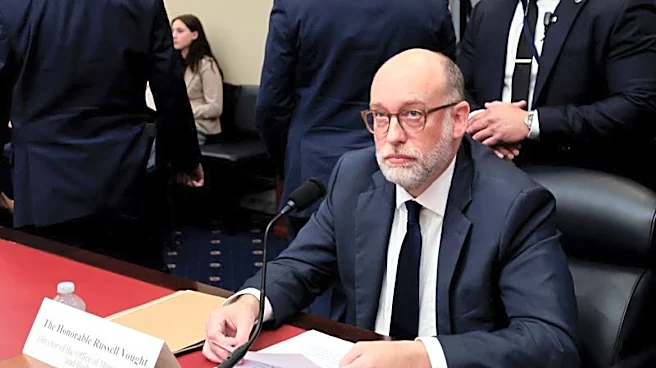
Russell Vought, Director of the Office of Management and Budget, defended the Trump administration's fiscal 2027 budget request before the House Budget Committee. The budget proposes a 10% reduction in non-defense spending while increasing defense funding
by 44% to $1.5 trillion. Democrats criticized Vought for alleged violations of spending laws, specifically impoundments, where the executive branch delays or withholds congressionally approved spending. The Government Accountability Office identified five instances of such violations. Vought argued that the administration's actions comply with the law and criticized the GAO's findings as partisan. The budget also includes a freeze on federal civilian pay and reductions in project grants from science agencies.
Why It's Important?
The proposed budget reflects the administration's priorities, emphasizing defense spending while cutting non-defense programs. This approach has significant implications for federal agencies and public services, potentially affecting areas like scientific research and public health. The controversy over impoundments highlights ongoing tensions between the executive branch and Congress regarding budgetary control. The administration's stance on spending could influence future fiscal policies and the balance of power between branches of government. The budget's impact on federal employees and grant-dependent programs could have broader economic and social consequences.
What's Next?
The budget proposal faces opposition from Democrats and may encounter challenges in Congress, particularly regarding the proposed cuts to non-defense spending. The administration's handling of impoundments could lead to further legal and political scrutiny. As the budget process unfolds, stakeholders, including federal agencies and advocacy groups, will likely continue to voice their concerns. The outcome of these debates could shape future budgetary policies and the administration's relationship with Congress.