
What's Happening?
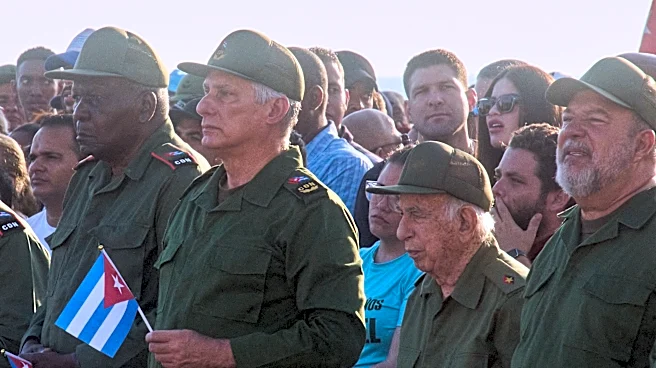
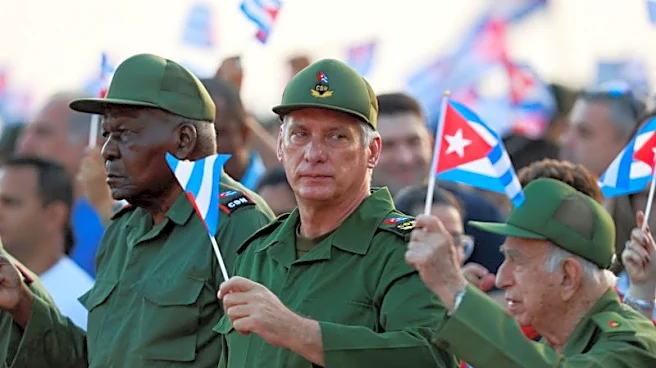
The Trump administration has announced new sanctions against Cuba, targeting five entities and several individuals, including Cuban President Miguel Díaz-Canel and his family. These measures are part of
a broader strategy to increase pressure on the Cuban government amid ongoing economic challenges on the island. U.S. Secretary of State Marco Rubio stated that the sanctions aim to disrupt networks funding Cuba's operations. The sanctions follow a monthslong oil blockade and are seen as an attempt to force the Cuban regime to make concessions.
Why It's Important?
The new sanctions could exacerbate Cuba's economic difficulties, which include fuel shortages and a struggling economy. While intended to pressure the Cuban government, the sanctions may also deepen the humanitarian crisis on the island, affecting ordinary citizens. The move reflects the U.S.'s continued hardline stance against Cuba, which could influence international relations and trade dynamics in the region. The sanctions also highlight the ongoing geopolitical tensions between the U.S. and Cuba, with potential implications for regional stability.
What's Next?
The Cuban government is likely to respond with condemnation and may seek support from international allies to counteract the sanctions. The U.S. may continue to escalate measures if the Cuban government does not comply with demands. Observers will watch for any shifts in Cuba's domestic policies or international alliances as a result of the increased pressure. The situation may also prompt discussions within the U.S. about the effectiveness and humanitarian impact of such sanctions.