





What's Happening?
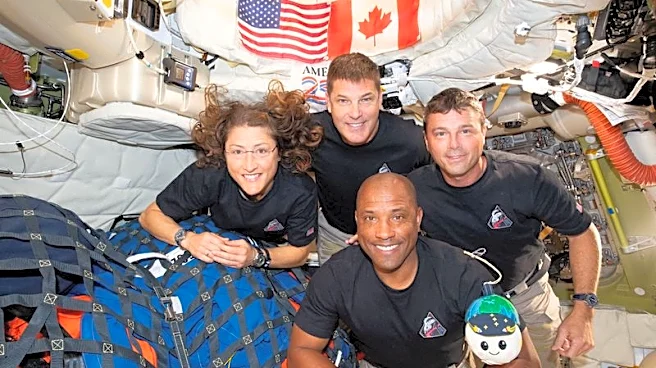
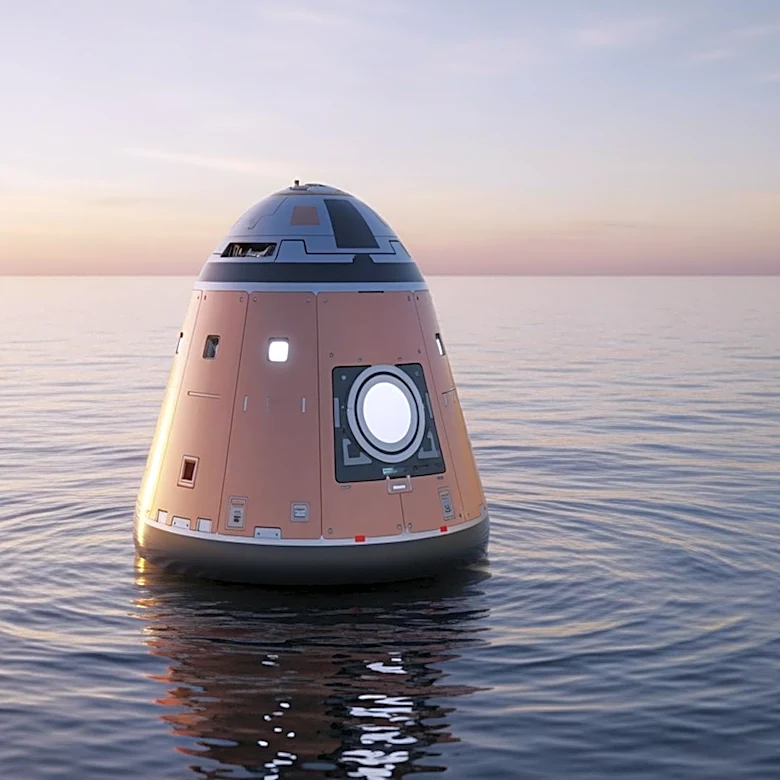
NASA's Artemis II mission has successfully concluded with the Orion spacecraft landing in the Pacific Ocean off the coast of California on April 10, 2026. The mission included NASA astronauts Reid Wiseman, Victor Glover, Christina Koch, and Canadian Space
Agency astronaut Jeremy Hansen. The spacecraft was seen descending under parachutes before splashdown, where recovery teams, including U.S. Navy divers, were prepared to assist. The crew was safely extracted and transferred to the USS John P. Murtha. This mission marks a significant milestone in NASA's efforts to return humans to the Moon and eventually to Mars.
Why It's Important?
The successful return of Artemis II is a critical step in NASA's Artemis program, which aims to establish a sustainable human presence on the Moon by the end of the decade. This mission tested the spacecraft's systems in preparation for future lunar missions. The involvement of international partners, such as the Canadian Space Agency, highlights the collaborative nature of modern space exploration. The mission's success could bolster public and governmental support for continued investment in space exploration, potentially leading to technological advancements and economic benefits.
What's Next?
Following the successful completion of Artemis II, NASA will analyze the data collected during the mission to refine the systems and procedures for future missions. The next step in the Artemis program is Artemis III, which aims to land astronauts on the lunar surface. This mission is scheduled for the late 2020s and will include the first woman and the next man on the Moon. Continued international collaboration and technological development will be crucial for the success of these future missions.