








What's Happening?
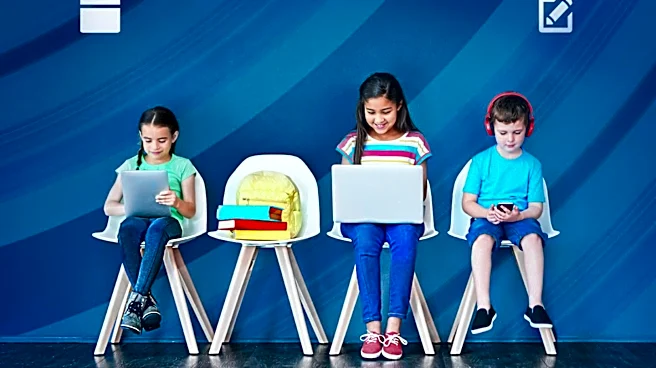
New Hampshire has implemented a digital device ban in schools for the 2025-26 school year, joining 40 other states that have enacted similar restrictions since 2023. This initiative aims to reduce students' reliance on cellphones and other digital devices
during school hours. Teachers have observed an increase in social interactions among students, as they are more engaged with their surroundings rather than screens. The National Education Association supports these bans, linking them to improvements in student behavioral and mental health. The Education Commission of the States reports that many states have expanded their restrictions to include breaks and lunchtimes. Teachers emphasize the need for a schoolwide culture shift to adapt to phone-free environments, suggesting that coupling these bans with social-emotional learning (SEL) supports can lead to better outcomes.
Why It's Important?
The digital device ban in schools is significant as it addresses concerns about the impact of screen time on students' mental health and social skills. By reducing distractions, these policies aim to improve students' focus and engagement in educational activities. The initiative reflects a broader movement to prioritize students' well-being and foster healthier school environments. The support from major educational organizations highlights the perceived benefits of such bans in addressing behavioral issues and promoting mental health. This trend may influence future educational policies and practices across the U.S., potentially leading to widespread adoption of similar measures.
What's Next?
As more states implement digital device bans, schools may need to develop strategies to support students' transition to phone-free environments. This could involve integrating SEL programs to enhance students' social skills and emotional well-being. Additionally, schools may need to reassess their technology use policies to ensure that educational tools are effectively utilized without over-reliance on personal devices. Ongoing evaluations of these bans' impact on student behavior and academic performance will be crucial in determining their long-term effectiveness and potential adjustments.