





What's Happening?
Seawater batteries (SWBs) are being developed as a promising technology for large-scale renewable energy storage, utilizing sodium ions from seawater as the active material. Unlike traditional sealed batteries, SWBs have an open component that interacts
with seawater and oxygen. During charging with renewable electricity, the battery traps sodium from saltwater at its negative pole, and during discharge, sodium returns to the sea, releasing stored electricity. These batteries employ a NASICON-type solid separator, a high-strength ceramic material, to maintain stability and prevent degradation from seawater, acting as a selective filter for sodium ions. This technology is currently in the research phase, with prototypes progressing from small button batteries to larger, modular units designed for industrial facilities, docks, and offshore generation parks.
Why It's Important?
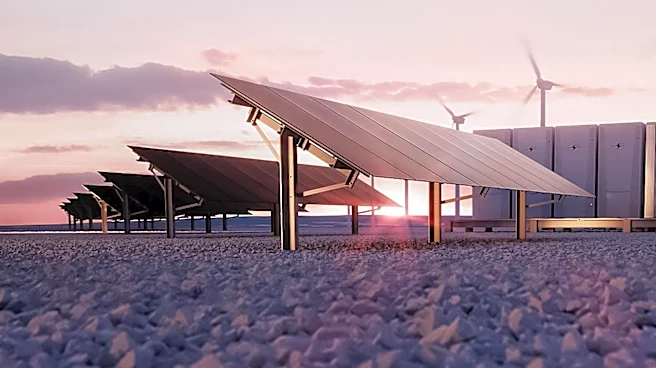
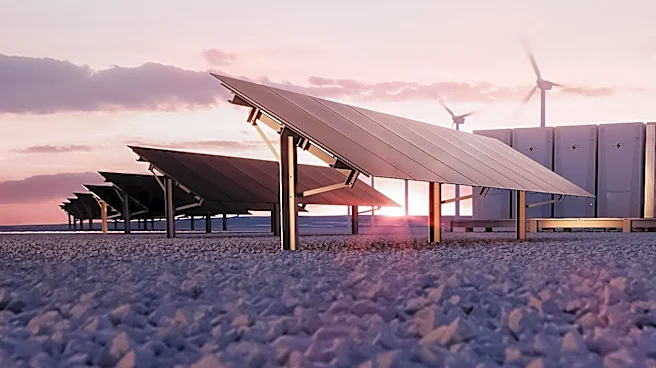
The development of seawater batteries is significant for the U.S. energy landscape as it offers a potential solution to the challenges of grid stability and dependence on critical raw materials like lithium and cobalt. As renewable energy sources like solar and wind become more prevalent, large-scale storage systems are essential to prevent energy loss during peak production. SWBs leverage abundant sodium from seawater, reducing the supply chain pressures associated with lithium-ion batteries. Furthermore, this technology presents a multi-faceted sustainability solution, potentially integrating water desalination and passive carbon capture within its operating cycle. For coastal regions in the U.S. facing water stress, the ability to combine electricity storage with desalination could be strategically valuable, while passive CO2 capture could contribute to climate mitigation efforts.
What's Next?
Research and development for seawater batteries will continue to focus on overcoming technical challenges to advance their commercial implementation. The modular design of current prototypes suggests a path toward industrial scalability, allowing for adaptation to various large-scale energy infrastructure projects. Future steps will likely involve further testing in diverse environments, optimizing efficiency, and reducing production costs to make SWBs competitive with existing storage solutions. The European Union's interest in increasing its capacity in this area indicates a global push for such innovations, which could influence investment and policy decisions in the U.S. regarding renewable energy storage and critical material diversification.
Beyond the Headlines
The innovation behind seawater batteries extends beyond mere energy storage, offering a glimpse into integrated sustainability solutions. The ability to simultaneously store energy, desalinate water, and capture carbon dioxide within a single system represents a paradigm shift in how we approach resource management and environmental challenges. This integrated approach could lead to the development of multi-functional energy hubs, particularly in coastal areas, transforming them into self-sufficient ecosystems that address energy, water, and climate concerns concurrently. Such advancements could foster new industries, create specialized jobs, and redefine the economic value of coastal resources, pushing the boundaries of what is possible in sustainable infrastructure development and resource utilization.