







What's Happening?
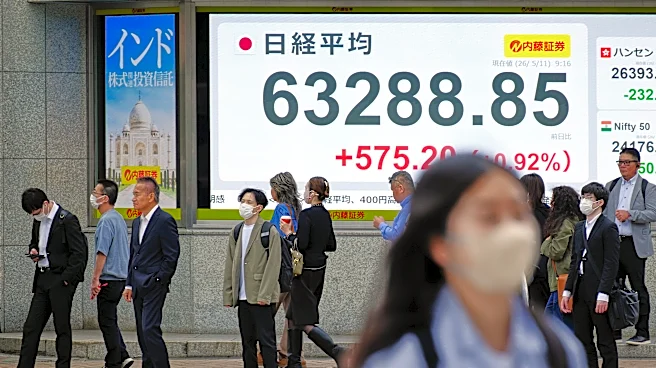
Asian stock markets experienced mixed results on Monday following President Trump's rejection of Iran's response to a U.S. ceasefire proposal. This decision led to a significant increase in oil prices, with Brent crude rising by 4.2% to $105.57 per barrel.
The rejection has heightened uncertainties surrounding the ongoing conflict in Iran, particularly affecting the Strait of Hormuz, a critical passage for global oil and gas transport. The U.S. continues to enforce a sea blockade of Iranian ports, contributing to the sustained high oil prices. The situation has also impacted Asian markets, with Japan's Nikkei 225 and South Korea's Kospi showing varied performances. The Nikkei fell by 0.4%, while the Kospi rose by 4.1%, driven by gains in technology stocks.
Why It's Important?
The rejection of Iran's ceasefire response by President Trump has significant implications for global oil markets and geopolitical stability. The surge in oil prices could lead to increased costs for consumers and businesses, potentially affecting economic growth. The closure of the Strait of Hormuz remains a critical concern, as it is a major route for oil transportation. The ongoing conflict and high oil prices could strain international relations, particularly between the U.S. and countries with economic ties to Iran, such as China. The situation underscores the volatility of global markets and the potential for geopolitical events to disrupt economic stability.
What's Next?
President Trump is scheduled to meet with Chinese leader Xi Jinping later this week, where the Iran conflict is expected to be a key topic of discussion. The U.S. is likely to urge China to use its influence over Iran to facilitate a peace deal and reopen the Strait of Hormuz. The outcome of these talks could have significant implications for the resolution of the conflict and the stabilization of oil prices. Analysts remain cautious, noting that the oil market is heavily influenced by ongoing developments in the region.