


What's Happening?
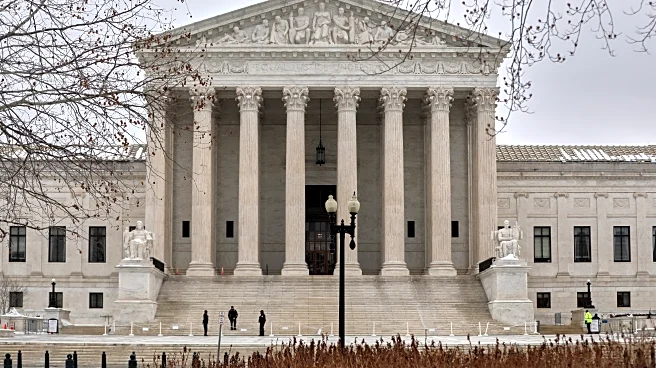
The U.S. Supreme Court has ruled against a series of tariffs imposed by President Trump, which were a significant part of his foreign policy strategy. The decision was made in a 6-3 vote, with two justices appointed by Trump joining the majority. These
tariffs were enacted under the International Emergency Economic Powers Act (IEEPA), which allows the president limited authority to address foreign threats through economic measures. Trump had argued that trade deficits and the flow of fentanyl justified these tariffs. In response, China has warned that there are no winners in a trade war and criticized the U.S. for violating international trade rules. The Trump administration plans to introduce new temporary tariffs, which China has vowed to monitor closely.
Why It's Important?
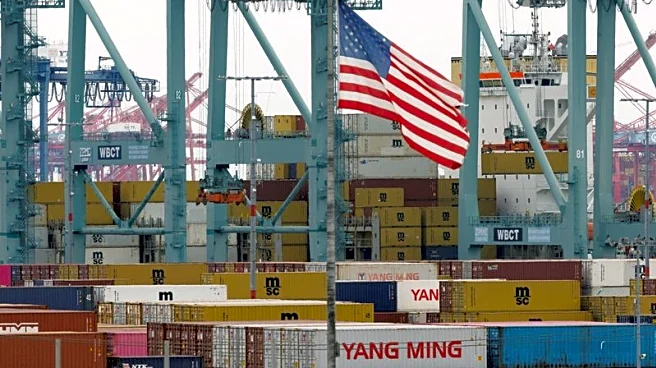
This ruling is significant as it challenges the extent of presidential power in imposing tariffs, traditionally a congressional responsibility. The decision could impact U.S. trade policy and its relations with major trade partners like China. The tariffs were initially justified by Trump as necessary to address trade imbalances and the opioid crisis, but their overturning may lead to increased tensions and economic uncertainty. The ruling also highlights internal divisions within the U.S. government, as Trump criticized the justices he appointed for their decision. The outcome could affect global supply chains and the stability of the world trade order, as noted by experts.
What's Next?
The new tariffs announced by Trump are set to take effect soon, with a 150-day duration unless extended by Congress. Trump plans to visit China in April to discuss trade relations further. This visit could be crucial in determining the future of U.S.-China trade relations and whether a new trade agreement can be reached. The situation remains fluid, with potential for both diplomatic negotiations and further economic measures.