







What's Happening?
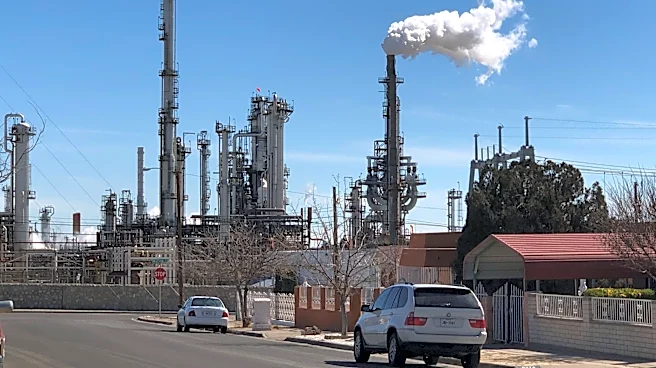
Texas Pacific Water Resources, a subsidiary of Texas Pacific Land Corp., is implementing freeze desalination technology to treat produced water from oil and gas operations in the Permian Basin. This initiative comes as Texas faces a critical shortage
of underground disposal space for the nearly 1 billion gallons of wastewater generated daily by oil and gas production. The company's facility in Orla is designed to treat 10,000 barrels (420,000 gallons) of produced water daily. The freeze desalination process separates salts from water molecules, allowing approximately half of the treated water to be recovered for reuse, while the remaining concentrated brine is disposed of underground. This technology is being explored as an alternative to traditional underground injection, which has been linked to increased seismic activity and blowouts. The Texas Commission on Environmental Quality (TCEQ) is currently developing permitting programs for the reuse of treated produced water, with pilot projects like Texas Pacific's providing crucial data.
Why It's Important?
The development of viable produced water treatment and reuse technologies is critical for the U.S. oil and gas industry, particularly in regions like the Permian Basin. The current reliance on underground injection for wastewater disposal is becoming unsustainable due to limited space and environmental concerns, including induced seismicity. A lack of disposal alternatives could significantly constrain oil production, impacting energy supply and the regional economy. The ability to treat and reuse this water could alleviate pressure on freshwater resources, which are also under strain in arid regions. Furthermore, the successful implementation of such technologies could set a precedent for environmental regulations and sustainable practices within the energy sector, potentially reducing the industry's environmental footprint and fostering innovation in water management. This shift could also create new economic opportunities in water treatment and related services.
What's Next?
The Texas Commission on Environmental Quality (TCEQ) is under increasing pressure to finalize and issue workable permits for the discharge and land application of treated produced water. Texas Pacific Water Resources, which has applied for a permit to discharge treated water into Salt Creek, a tributary of the Pecos River, anticipates receiving approval by the end of the year. Ongoing scientific research, including multi-year studies on the cumulative effects of continuous irrigation with treated produced water, will continue to inform regulatory decisions. The industry is also exploring on-site reuse of treated water for internal operations, such as in condensers and chillers, and potentially for data centers flocking to the Permian Basin. However, challenges remain, including the energy-intensive nature of desalination technology and the need for clear, economically feasible monitoring and testing requirements from regulators.
Beyond the Headlines
The push for produced water reuse highlights a broader societal and environmental challenge: balancing energy production with sustainable resource management. The ethical implications of treating and reusing water that contains hazardous compounds, even after treatment, are significant, raising questions about public health and long-term environmental impacts. The tension between regulatory rigor and economic feasibility is evident, as companies seek cost-effective solutions while environmental groups advocate for robust safety standards. This situation underscores the need for transparent data, peer-reviewed research, and public engagement in policy-making. The long-term success of these initiatives will depend not only on technological advancements but also on building public trust and establishing comprehensive, science-backed regulatory frameworks that ensure the safety and sustainability of water reuse practices.