
What's Happening?
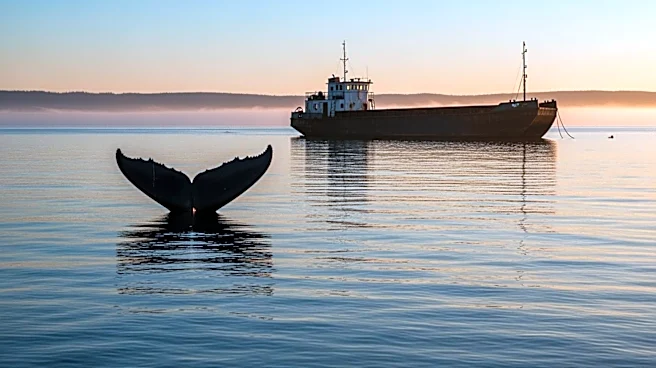
German authorities have approved a new rescue attempt for a humpback whale stranded off the Baltic Sea coast near Lübeck. The whale, named Timmy, has been stuck on a sandbank for over a month. Previous
rescue efforts failed, but two entrepreneurs have funded a new plan to transport the whale using a special barge to deeper waters. The decision follows an outcry after initial plans to abandon the rescue. The environment minister of Mecklenburg-Western Pomerania, Till Backhaus, confirmed the whale's fitness for transport after veterinary examination. The rescue has attracted significant media attention and public interest.
Why It's Important?
The rescue attempt underscores the challenges and ethical considerations in wildlife conservation efforts. Successfully relocating the whale could set a precedent for future marine animal rescues, highlighting the role of private funding and public advocacy in conservation. The situation also raises questions about human intervention in natural processes and the risks involved in such operations. The media coverage reflects the public's growing concern for wildlife and environmental issues, potentially influencing policy and funding for similar initiatives. The outcome of this rescue could impact future strategies for dealing with stranded marine animals.
What's Next?
If the rescue is successful, it could lead to increased support for similar conservation efforts and potentially influence policy changes regarding marine wildlife protection. The involvement of private entrepreneurs may encourage more public-private partnerships in environmental conservation. However, if the rescue fails, it could spark further debate about the risks and ethics of human intervention in wildlife situations. The scientific community may also reassess the feasibility and safety of such operations, potentially leading to new guidelines or protocols for future rescues.