
What's Happening?
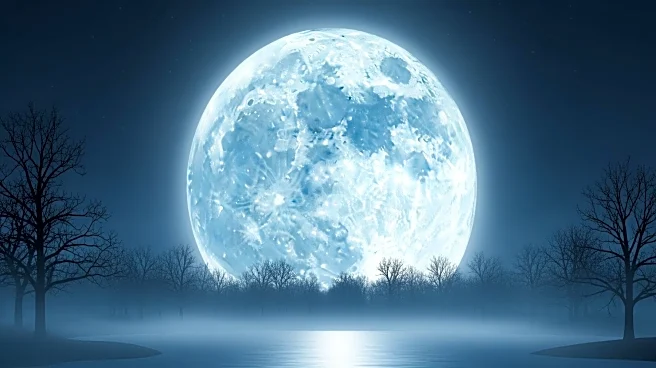
The last supermoon of 2025, known as the cold moon, has been observed across the U.S., offering a stunning celestial display. This supermoon, which occurs when the moon is at its closest point to Earth,
appeared larger and brighter than usual. The cold moon is traditionally associated with the frigid season and the longest nights of the year, coinciding with the winter solstice. This event follows the harvest and beaver supermoons earlier in the year, marking the end of a series of supermoons visible in 2025.
Why It's Important?
Supermoons are significant for both scientific observation and cultural appreciation. They provide an opportunity for astronomers to study the moon's surface and its effects on Earth, such as tides. For the public, supermoons are a chance to engage with astronomy and appreciate the natural beauty of the night sky. The cold moon's timing with the winter solstice also highlights the cultural and historical significance of lunar events, which have been celebrated in various traditions worldwide. This celestial event can inspire educational initiatives and community gatherings centered around astronomy.
What's Next?
The next supermoon, known as the wolf moon, is scheduled for January 3, 2026. This will be the first full moon of the new year and the last in the current series of supermoons. As the winter solstice passes, daylight hours will gradually increase, leading to the spring equinox. Astronomers and enthusiasts will continue to track lunar phases and other celestial events, contributing to a deeper understanding of the moon's influence on Earth and its cultural significance.