



What's Happening?
Residents in Chicago's Edgewater neighborhood are protesting a proposed high-rise development along the lakefront, planned for the site of the Emanuel Congregation synagogue. The development, which includes approximately 600 units and a new place of worship,
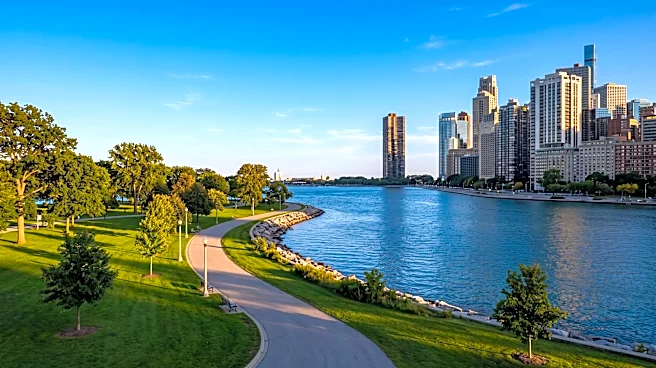
has sparked division within the community. Opponents, led by groups such as Edgewater Residents for Responsible Development and the Association of Sheridan Road Condo and Cooperative Owners, argue that the project would reduce public access to Lake Michigan, violating the 1973 Lakefront Protection Ordinance. They advocate for the city to acquire private property along the lakefront for public park expansion. Supporters of the development, including members of the Emanuel Congregation and the Jewish Council of Urban Affairs, highlight that 20% of the units will be affordable housing and believe the project will enhance the area and preserve beach accessibility. The latest proposal, from July, outlines one five-story building west of Sheridan Road and two apartment buildings, 12 and 25 stories, on the east side, alongside the existing Malibu Condominiums.
Why It's Important?
This protest underscores a significant conflict between urban development, public access to natural resources, and community interests in a major U.S. city. The debate over the Edgewater lakefront development highlights the ongoing tension between private property rights and public good, particularly concerning valuable lakefront real estate. The invocation of the 1973 Lakefront Protection Ordinance by opponents emphasizes the historical commitment to preserving Chicago's lakefront for public use, making this case a test of its continued efficacy. The inclusion of affordable housing units in the development plan introduces a social equity dimension, pitting housing needs against environmental and public access concerns. Furthermore, the controversy has touched upon religious and cultural issues, with accusations of antisemitism against protesters, which they strongly deny, adding a layer of complexity to the local discourse. The outcome could set a precedent for future lakefront developments and public land use in Chicago.
What's Next?
A new stakeholder, Friends of the Parks, has urged Ald. Leni Manaa-Hoppenworth (48th Ward) to dedicate a portion of the lakefront property to the Chicago Park District. They propose a 100-foot deep strip from the high-water mark be designated as permanent public shoreline, ensuring 0.6 acres of public space while leaving two-thirds of the site for development. Friends of the Parks also requests a comprehensive environmental and shoreline investigation into coastal vulnerability, ecological impacts, and stormwater management. The Chicago Department of Transportation is expected to publish a traffic study and travel demand management plan before the proposal reaches the Chicago Plan Commission. The Emanuel Congregation, which owns the land, maintains its right to develop the property, citing the need for a new synagogue building due to the high upkeep costs of their current structure. The various stakeholders will continue to engage in discussions and advocacy as the project moves through the city's planning and approval processes.
Beyond the Headlines
The Edgewater lakefront development controversy reflects broader national discussions about urban planning, gentrification, and the balance between economic growth and environmental preservation. The debate over property tax breaks for developers, especially when residents claim their own property taxes have doubled, highlights concerns about equitable development and the distribution of financial burdens and benefits. The accusations of antisemitism, while denied by protesters, point to the potential for sensitive cultural and religious elements to become entangled in land-use disputes, complicating public discourse and potentially polarizing communities. This situation also brings to light the challenges faced by religious institutions in maintaining their facilities in rapidly changing urban environments. The long-term implications could include shifts in how cities manage their valuable public spaces, the enforcement of environmental protection ordinances, and the integration of affordable housing mandates within large-scale development projects.