
What's Happening?
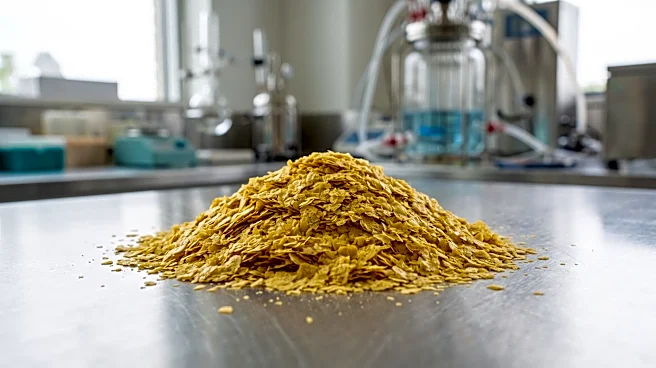
Researchers have successfully developed a novel cell-based food product named 'Meat-Tremella,' which combines porcine muscle stem cells with a mushroom-derived polysaccharide scaffold. This innovative
approach utilizes arachidic acid, a natural fatty acid, to significantly boost myogenesis and myotube formation in the porcine muscle stem cells. The team integrated this biochemical stimulus with a three-dimensional scaffold made from Tremella fuciformis polysaccharides and sodium alginate, creating a cohesive, protein-enriched structure suitable for culinary applications. This development addresses a key challenge in cellular agriculture: the progressive degradation of myogenic potential in muscle stem cells during serial passaging, which limits the quantity and quality of muscle fibers produced. By identifying food-grade signaling molecules like arachidic acid and using biocompatible physical supports, the researchers aim to sustain late-passage cell maturation and improve the efficiency of cultured meat production. The resulting 'Meat-Tremella' constructs demonstrated enhanced hardness, gumminess, and chewiness compared to cell-free scaffolds, and retained structural stability after cooking, indicating gastronomic viability. Biochemical analysis also showed a significant increase in total amino acid content, including essential and branched-chain amino acids, surpassing natural Tremella fuciformis mushroom tissue.
Why It's Important?
This research represents a significant step forward in the field of cellular agriculture, offering a potential solution to environmental pollution, resource consumption, and animal welfare concerns associated with traditional meat production. The ability to create nutritionally viable and texturally appealing cultured meat products using edible scaffolds and natural fatty acids could accelerate the commercialization and consumer acceptance of lab-grown meat. By enhancing muscle stem cell differentiation and maintaining structural integrity, this technology could lead to more efficient and scalable production methods for cultivated meat. The use of mushroom-derived polysaccharides as scaffolds also introduces a sustainable and potentially cost-effective material, reducing reliance on synthetic or animal-derived components. Furthermore, the detailed understanding of how arachidic acid regulates muscle maturation at a molecular level provides valuable insights that could be applied to optimize other cell-based food systems. This innovation could pave the way for a new generation of hybrid food products that offer both nutritional benefits and a reduced environmental footprint, impacting the food industry and consumer choices globally.
What's Next?
The immediate next steps for this research would likely involve further optimization of the 'Meat-Tremella' production system, including scaling up the process for larger yields and conducting more extensive nutritional and safety assessments. Researchers may explore different types of edible scaffolds and fatty acids to identify other synergistic combinations that could further enhance the quality and efficiency of cultured meat. Long-term, this technology could be adapted for other types of cultured meat, such as beef or chicken, by applying similar principles of scaffold design and biochemical stimulation. Regulatory bodies will need to evaluate these novel hybrid food products for safety and labeling, which will be crucial for market entry. As the technology matures, collaborations with food manufacturers could lead to the development of commercial products, potentially offering consumers alternative protein sources that are both sustainable and palatable. The success of such products could influence dietary trends and contribute to a more sustainable global food system.
Beyond the Headlines
The development of 'Meat-Tremella' touches upon several deeper implications beyond immediate food production. Ethically, it furthers the conversation around animal welfare by offering a viable alternative to conventional animal farming, potentially reducing the ethical dilemmas associated with industrial livestock practices. Legally, the classification and regulation of such hybrid products will be a complex area, as they blur the lines between plant-based and animal-derived foods. This could necessitate new regulatory frameworks for novel food categories. Culturally, the acceptance of 'Meat-Tremella' and similar hybrid foods will depend on consumer perceptions of lab-grown products, their willingness to embrace new food technologies, and how these products are marketed. It could also spark a broader shift in culinary practices, encouraging innovation in food preparation and ingredient sourcing. In the long term, this research contributes to the broader bio-economy, where biological processes and materials are leveraged to create sustainable solutions across various industries, potentially leading to new economic opportunities and a more resilient food supply chain.