



What's Happening?
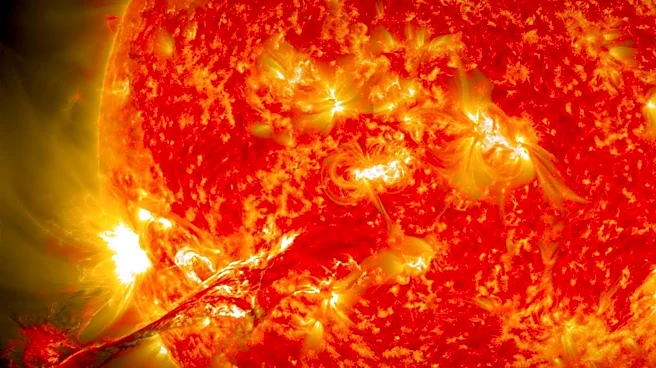
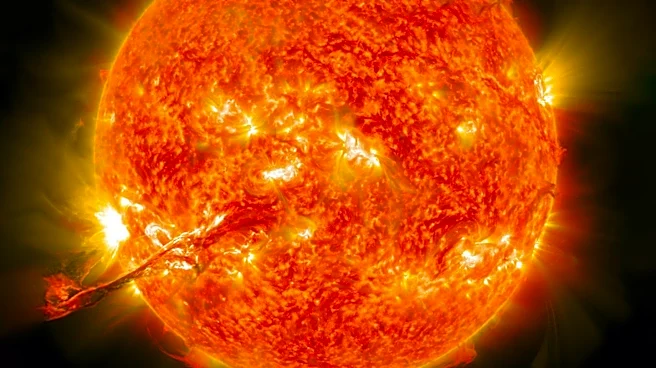
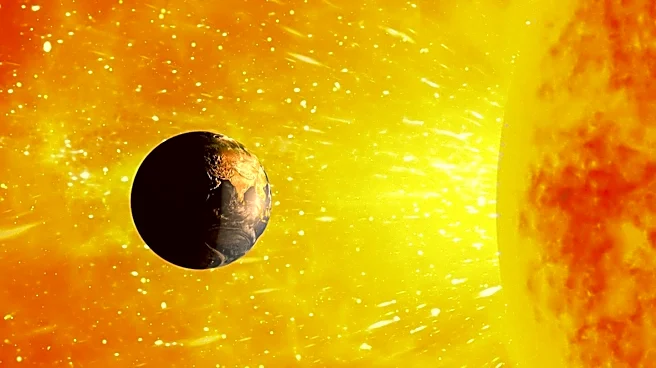
Recent research indicates that the impact of extreme solar storms, such as the Carrington Event of 1859, could be more severe than previously believed. Solar storms occur when solar wind interacts with Earth's magnetosphere, potentially affecting electrical
grids, navigation systems, and satellite communications. Historically, it was thought that Earth's magnetic field had a saturation point, limiting its response to intense solar winds. However, new findings suggest this saturation may not exist, implying that Earth's response could be more significant during such events. The study utilized a statistical model to account for uncertainties in solar wind measurements, revealing that the geomagnetic impact could be twice as severe as traditional models predict.
Why It's Important?
The implications of this study are significant for global infrastructure and technology. If Earth's response to solar storms is indeed more intense, it could lead to widespread disruptions in power grids, communication systems, and satellite operations. This poses a risk to industries reliant on these technologies, potentially affecting economic stability and public safety. The findings urge a reevaluation of current models and preparedness strategies for space weather events, highlighting the need for enhanced monitoring and protective measures to mitigate potential impacts.
What's Next?
The study suggests that future modeling of solar storms should incorporate these new findings to better predict and prepare for extreme events. This may involve developing more robust infrastructure and communication systems capable of withstanding severe geomagnetic disturbances. Additionally, further research is needed to gather more data on extreme solar storms to refine predictions and response strategies. Stakeholders, including governments and industries, may need to invest in technologies and policies that enhance resilience against such space weather phenomena.