





What's Happening?
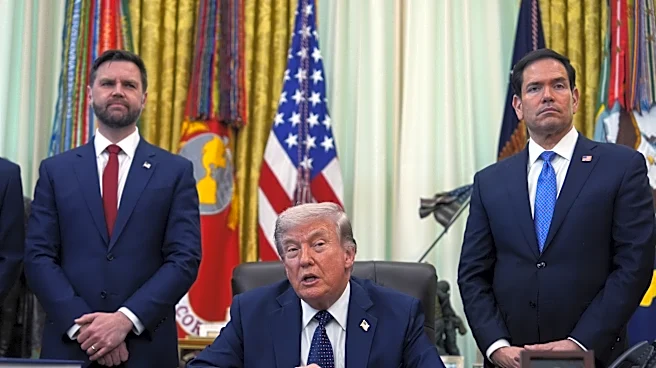
President Trump announced a three-week extension of the ceasefire between Israel and Hezbollah following a series of rocket attacks by Hezbollah on the Western Galilee. The announcement came after a meeting at the White House with Israeli and Lebanese
representatives. The ceasefire extension aims to stabilize the region after Hezbollah launched four rockets into Israeli territory, which were intercepted by the Israeli Air Force. No injuries or damage were reported. The meeting, described by Trump as 'very well,' included discussions on U.S. support for Lebanon to protect itself from Hezbollah. The Israeli military has been active in southern Lebanon, targeting what it describes as militant infrastructure, and recently conducted airstrikes in response to Hezbollah's actions.
Why It's Important?
The extension of the ceasefire is significant as it seeks to prevent further escalation in a volatile region. The involvement of the U.S. underscores its role in Middle Eastern diplomacy and its interest in maintaining stability between Israel and Lebanon. The ceasefire extension could provide a window for diplomatic efforts to address underlying tensions. For Israel, the ceasefire offers a temporary reprieve from cross-border hostilities, while Lebanon may benefit from U.S. support in strengthening its defenses against Hezbollah. The situation remains delicate, with potential impacts on regional security and U.S. foreign policy in the Middle East.
What's Next?
The next steps involve continued diplomatic engagement between the U.S., Israel, and Lebanon to solidify the ceasefire and address security concerns. President Trump expressed intentions to host further talks with Israeli Prime Minister Netanyahu and Lebanese President Aoun. The international community will likely monitor the situation closely, with potential for further negotiations or interventions if hostilities resume. The ceasefire's success depends on the cooperation of all parties involved and their commitment to peace.