






What's Happening?
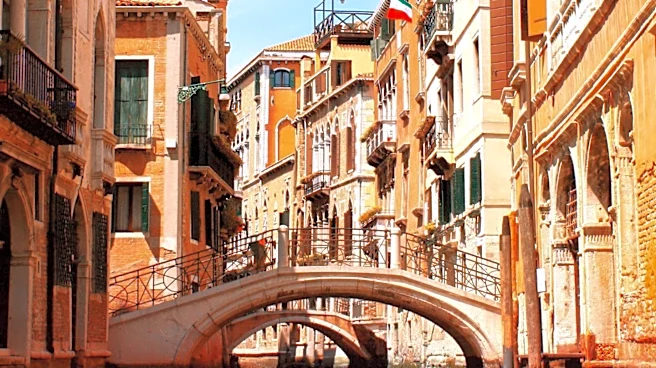
Venice, Italy, is a distinctive city constructed on over a hundred small islands within a shallow lagoon at the northern end of the Adriatic Sea. The city is characterized by its canals, which serve as its primary thoroughfares, with vaporetti (water
buses) acting as public transportation. Key landmarks include Piazza San Marco, St. Mark’s Basilica, the Doge’s Palace, the Rialto Bridge, and the Grand Canal. Venice's historical significance as a maritime power and a central hub for trade between Europe and the East is evident in its opulent palaces, golden mosaics, and elaborate churches. The city's unique physical layout, where water dictates the rhythm of daily life, contributes to its distinct atmosphere, influencing everything from the quality of light reflecting off its stone facades to how sound travels. Visitors can engage in various activities, such as guided tours of St. Mark’s Basilica and the Doge’s Palace, water bus transfers from Venice Marco Polo Airport, and boat tours to the islands of Murano, Burano, and Torcello.
Why It's Important?
Venice's enduring appeal as a global tourist destination highlights the economic importance of cultural heritage and unique urban planning. Its reliance on tourism, while a significant revenue source, also presents challenges related to preservation and managing visitor impact. The city's historical role as a trading empire underscores the long-term economic benefits of strategic geographical positioning and cultural exchange. The architectural and artistic legacy, influenced by its relationship with Constantinople and the Byzantine world, showcases the profound impact of historical trade routes on cultural development. The city's efforts to manage tourism, such as the introduction of an access fee for day-trippers, reflect a broader global trend among popular destinations to balance economic gain with environmental and cultural sustainability. The unique transportation system, centered on canals and water buses, also offers a model for urban mobility that minimizes traditional road infrastructure, providing insights into alternative city planning.
What's Next?
Venice continues to implement measures to manage its significant tourist influx, including the access fee for day visitors, which may evolve in its application and scope. Visitors planning a trip are advised to check the official Venice Access Fee website for the latest regulations, as these can change annually. The city will likely continue to explore sustainable tourism practices to protect its delicate ecosystem and historical structures. Efforts to encourage visitors to explore beyond the main tourist hubs, such as the districts of Cannaregio and Dorsoduro, aim to distribute tourism more evenly and provide a more authentic experience while supporting local businesses. The ongoing maintenance and preservation of its iconic landmarks, such as St. Mark’s Basilica and the Doge’s Palace, will remain a priority to ensure these historical treasures are accessible for future generations.
Beyond the Headlines
The unique urban fabric of Venice, built on water, presents profound challenges and opportunities. The city's vulnerability to rising sea levels and the impact of mass tourism raise critical questions about urban resilience and the preservation of cultural heritage in the face of environmental and societal pressures. The historical development of Venice, from a defensive settlement to a powerful maritime republic, illustrates how human ingenuity can transform challenging environments into centers of wealth and culture. The concept of the 'ghetto,' originating in Venice with the forced segregation of its Jewish population, serves as a stark reminder of historical social injustices and the enduring impact of such policies on urban landscapes and communities. The city's blend of historical grandeur and contemporary challenges offers a compelling case study for understanding the complex interplay between culture, economy, and environment in a globally significant urban center.