


What's Happening?
North Korea's leadership has announced plans to hold a party congress in late February 2026, marking the first such gathering since 2021. The decision was made during a meeting of the Workers Party of Korea (WPK), led by Kim Jong Un. The congress, which
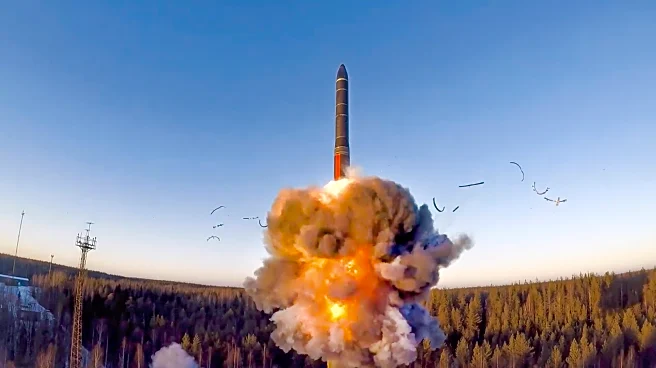
is the ruling party's top gathering, is expected to serve as a platform for significant policy announcements and potential shifts in elite personnel. Historically, these congresses have been used by Kim to emphasize the completion and enhancement of North Korea's nuclear capabilities. The upcoming congress is anticipated to focus on maximizing the country's nuclear operational prowess, as suggested by Lee Ho-ryung, a principal researcher at the Korea Institute for Defense Analyses. This event follows a series of missile tests and ongoing tensions with the United States and South Korea, particularly concerning nuclear submarine technology.
Why It's Important?
The upcoming party congress is significant as it could signal North Korea's strategic direction regarding its nuclear arsenal, which has been a point of international concern. The potential declaration of maximized nuclear capabilities could escalate tensions with the United States and its allies, impacting diplomatic relations and regional security. North Korea's continued development of its nuclear program, despite international sanctions and UN Security Council bans, underscores the challenges in curbing its nuclear ambitions. The congress may also influence North Korea's foreign policy, especially its relations with Russia, given their recent military cooperation. The outcomes of this congress could affect global security dynamics and the geopolitical landscape in East Asia.
What's Next?
Following the congress, North Korea may announce new policies or military strategies, particularly concerning its nuclear deterrent. The international community, including the United States and South Korea, will likely monitor these developments closely, potentially leading to diplomatic responses or adjustments in military strategies. The congress could also impact North Korea's internal politics, with possible changes in leadership roles or party positions. Additionally, the event may influence North Korea's economic policies, especially if it seeks to balance military advancements with economic development.
Beyond the Headlines
The congress may have deeper implications for North Korea's domestic and international standing. Domestically, it could reinforce Kim Jong Un's authority and solidify his succession plans, as indicated by the presence of his daughter, Ju Ae, at recent military tests. Internationally, the congress could affect North Korea's diplomatic relations, particularly with countries involved in denuclearization talks. The event may also highlight the regime's resilience in maintaining its nuclear program despite economic hardships and international isolation. Furthermore, the congress could serve as a platform for North Korea to assert its sovereignty and defiance against perceived external threats.