








What's Happening?
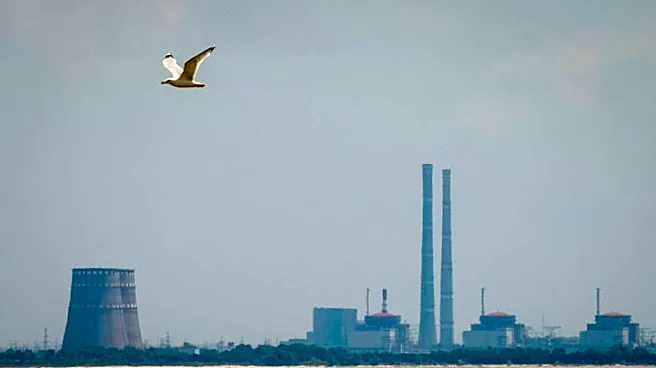
Russian forces have reportedly targeted a storage facility for spent nuclear fuel near Ukraine's Chornobyl power plant. President Volodymyr Zelenskyy described the attack as 'extremely vile,' although it did not result in a spike in radiation levels.
The International Atomic Energy Agency (IAEA) confirmed that a fuel-reception building was significantly damaged, but no spent fuel was present at the time. The attack, which involved a Shahed drone, did not cause any injuries, and a fire resulting from the strike was extinguished. Russia has not commented on the incident, which occurred approximately 15 kilometers from the Chornobyl plant, the site of the 1986 nuclear disaster.
Why It's Important?
This incident underscores the ongoing tensions and hostilities between Russia and Ukraine, particularly concerning critical infrastructure. The attack on a nuclear facility raises significant safety concerns, given the potential for catastrophic consequences if nuclear materials were compromised. The IAEA's involvement highlights the international community's vigilance over nuclear safety in conflict zones. The strike also reflects the broader pattern of Russian military tactics, which have included targeting Ukrainian infrastructure. This development could further strain diplomatic relations and impact regional security dynamics.
What's Next?
The IAEA plans to send a team to inspect the site and assess the impact of the strike. This inspection will be crucial in determining the extent of the damage and ensuring that safety protocols are maintained. The international community may increase pressure on Russia to cease attacks on critical infrastructure, particularly those with potential nuclear implications. Ukraine is likely to seek further support from its allies to bolster its defenses against such attacks. The situation may also prompt discussions on enhancing the protection of nuclear facilities in conflict zones.