

What's Happening?
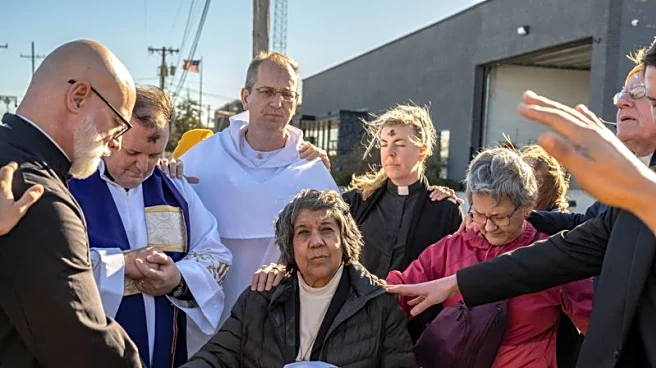
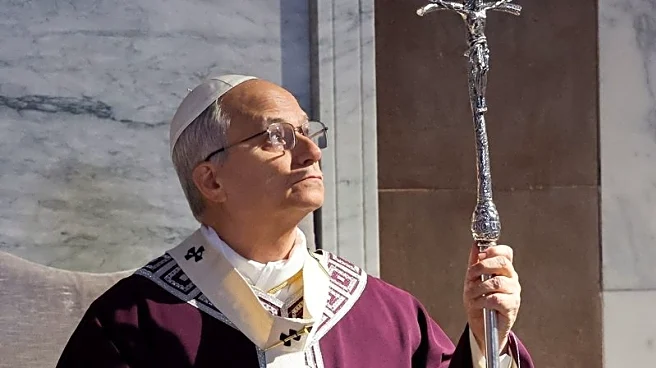
On Ash Wednesday, Cardinal Blase J. Cupich of Chicago and Cardinal Joseph Tobin of Newark led religious services that underscored the Catholic Church's commitment to supporting immigrant communities affected by U.S. immigration policies. Cardinal Cupich conducted
an outdoor Mass in Melrose Park, Illinois, attended by over 3,000 people, including families of those detained or deported. This event was organized by the Coalition for Spiritual and Public Leadership and the Scalabrinian Missionaries. The Mass followed a federal judge's order allowing clergy access to the Broadview ICE detention facility for Ash Wednesday services. Cardinal Tobin celebrated Masses inside the Delaney Hall detention center in Newark, emphasizing the church's role in upholding human dignity. These events are part of ongoing efforts by religious leaders to provide spiritual support and advocate for the rights of immigrants facing detention and deportation.
Why It's Important?
The actions of Cardinals Cupich and Tobin highlight the Catholic Church's active role in addressing immigration issues in the United States. By conducting Masses with detainees and their families, the church is drawing attention to the human impact of immigration enforcement policies. This initiative underscores the church's advocacy for religious freedom and the right to pastoral care for all individuals, regardless of their legal status. The events also reflect broader societal debates about immigration policy and the treatment of immigrants, particularly in detention facilities. The church's involvement may influence public opinion and policy discussions, potentially leading to changes in how immigration laws are enforced and how detainees are treated.
What's Next?
Following the federal judge's ruling, the Department of Homeland Security is required to allow clergy access to ICE facilities for religious services. This decision may set a precedent for future cases involving religious access to detention centers. The Coalition for Spiritual and Public Leadership and other advocacy groups are likely to continue their efforts to ensure that detainees receive spiritual support and that their rights are protected. The church's ongoing involvement in immigration issues may lead to increased dialogue between religious organizations, government agencies, and policymakers, potentially influencing future immigration policies and practices.
Beyond the Headlines
The church's actions during Ash Wednesday highlight the intersection of faith and social justice, emphasizing the moral and ethical dimensions of immigration policy. By framing immigration issues within the context of religious teachings, the church is challenging societal norms and advocating for a more compassionate approach to immigration enforcement. This approach may inspire other religious and civil society groups to engage more actively in social justice issues, potentially leading to broader movements for change. The church's involvement also raises questions about the role of religious institutions in political and social debates, particularly in a diverse and pluralistic society.