




What's Happening?
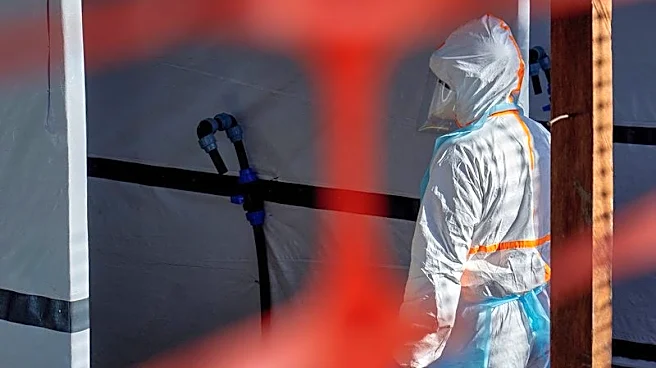
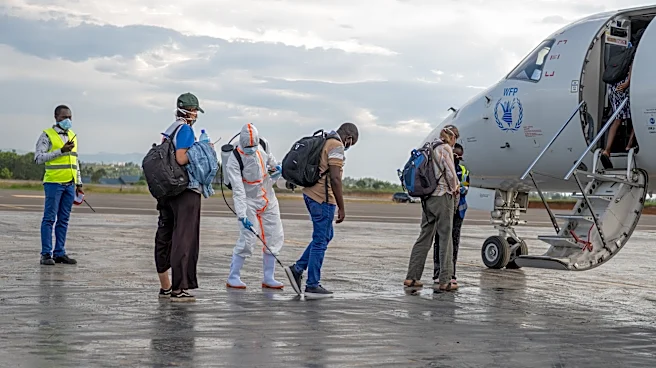
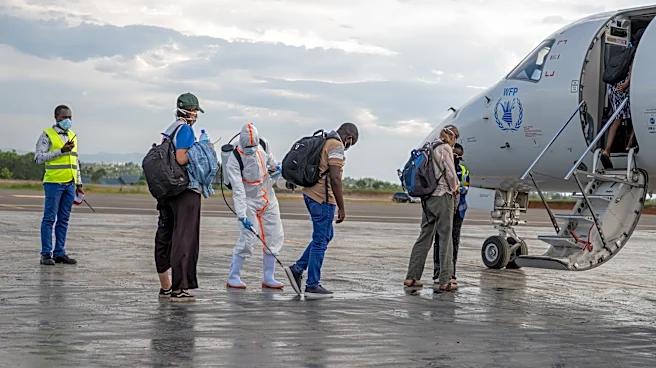
The U.S. Centers for Disease Control and Prevention (CDC) has issued a report warning that the current Ebola outbreak in Africa could reach levels comparable to the worst recorded outbreak if immediate action is not taken. The outbreak, affecting the Democratic
Republic of Congo and Uganda, could result in over 20,000 cases within three months. The CDC emphasizes the need for large-scale public health interventions to prevent a worst-case scenario. The outbreak is complicated by regional conflicts and limited healthcare access, making containment efforts challenging.
Why It's Important?
The potential for the Ebola outbreak to escalate to such a severe level poses a significant threat to global health. The situation underscores the importance of international cooperation and resource allocation to contain the virus. The outbreak's spread could have devastating effects on the affected regions, including increased mortality rates and further strain on healthcare systems. The CDC's report serves as a critical reminder of the need for swift and coordinated action to prevent a repeat of past epidemics.
What's Next?
Efforts to contain the outbreak will likely involve increased international support and the deployment of healthcare workers to the affected areas. The CDC and other health organizations may focus on improving isolation and contact tracing measures to limit the virus's spread. Additionally, there may be a push for the development and distribution of vaccines and treatments to mitigate the outbreak's impact. The situation will require ongoing monitoring and adaptation of strategies to address the evolving challenges posed by the outbreak.