


What's Happening?
The United States Space Force's Space Systems Command (SSC) is gearing up for the USSF-87 mission, set to launch from Cape Canaveral Space Force Station, Florida. The mission will utilize a United Launch Alliance (ULA) Vulcan Centaur rocket from Space Launch Complex
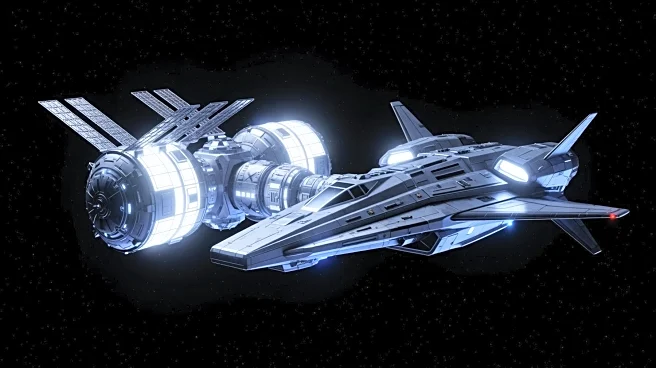
41. Scheduled for February 12, 2026, the launch window spans two hours, from 3:30 to 5:30 a.m. EST. This mission marks the second launch of the Vulcan Centaur since its certification under the National Security Space Launch program. The primary payload for USSF-87 is the Geosynchronous Space Situational Awareness Program (GSSAP) space system, developed by Northrop Grumman. This system supports U.S. Space Command's space surveillance operations, providing enhanced positional knowledge of satellites in geostationary orbit. The mission also includes additional research, development, and training systems to refine on-orbit maneuvers and enhance resiliency in geosynchronous orbit.
Why It's Important?
The USSF-87 mission is crucial for advancing space technology and enhancing the United States' capabilities in space surveillance and safety. The GSSAP payload plays a vital role in improving flight safety for all spacefaring nations by providing timely and accurate orbital predictions. This enhances the ability to avoid satellite collisions and manage the increasingly crowded geostationary orbit. The mission also contributes to the U.S. Space Force's core function of Space Access, supporting economic, technological, and scientific leadership in the space domain. By refining tactics and procedures for precision on-orbit maneuvers, the mission strengthens the resilience and protection of U.S. assets in space.
What's Next?
Following the launch, the USSF-87 mission will focus on operationalizing the GSSAP system and other payloads to support ongoing space surveillance and safety operations. The Space Systems Command will continue to develop and validate tactics and techniques for on-orbit maneuvers, ensuring the protection and resilience of U.S. space assets. The mission's success will likely lead to further advancements in space technology and surveillance capabilities, reinforcing the United States' strategic advantage in space.
Beyond the Headlines
The USSF-87 mission highlights the growing importance of space as a domain for national security and technological advancement. As space becomes increasingly crowded, the need for sophisticated surveillance and safety systems like GSSAP becomes more critical. The mission also underscores the collaborative efforts between government agencies, industry partners, and allied nations in maintaining space security and advancing technological capabilities. The development of resilient and ready launch infrastructure further supports U.S. leadership in the space domain.