


What's Happening?
Family members of World War II veteran Dwight Stevens gathered in Willmar, Minnesota, to posthumously receive his military honors. U.S. Rep. Michelle Fischbach hosted the ceremony, which included Stevens' children, Debrah Pickering and Wes Stevens, at Veterans
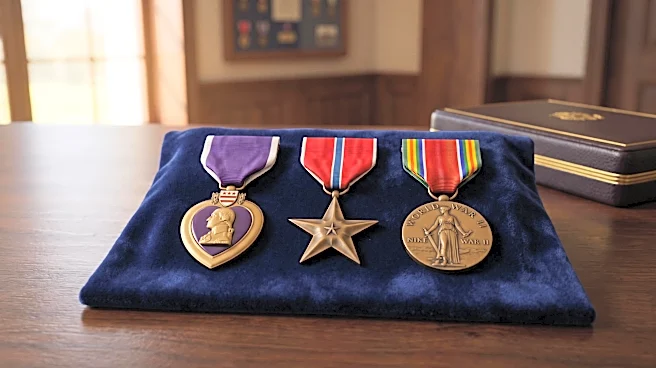
of Foreign Wars Post 1639. VFW member Brian Gislason and Kandiyohi County Veterans Service Officer Trisha Appeldorn assisted in presenting the awards and detailing Stevens' service. Stevens, who passed away in 2010 at 84, rarely spoke about his wartime experiences. His children noted that he was a changed man after the war, suppressing his emotions. The medals presented included the Bronze Star Medal with an Oakleaf Cluster, the Marksman Badge, the World War II Victory Medal, the Purple Heart, and three Bronze Service Stars. Stevens served as a rifleman, tank mechanic, and light truck driver in the U.S. Army 10th Armored Division from July 6, 1944, to March 17, 1946, participating in significant battles such as the Battle of the Bulge and the liberation of the Dachau concentration camp.
Why It's Important?
This ceremony highlights the ongoing effort to recognize and honor the sacrifices of World War II veterans, many of whom, like Dwight Stevens, carried the weight of their experiences silently. The posthumous presentation of medals underscores the importance of historical record-keeping and ensuring that veterans receive the recognition they earned, even decades later. For the Stevens family, this event provided a deeper understanding of their patriarch's service and the profound impact it had on his life and their family dynamics. It also sheds light on the mental health challenges faced by many returning soldiers, who often suppressed their wartime trauma. The event serves as a poignant reminder of the human cost of war and the enduring legacy of those who served, emphasizing the need for continued support and remembrance for veterans and their families.
What's Next?
While this specific ceremony concludes the formal recognition for Dwight Stevens, it contributes to a broader national conversation about veteran affairs and historical acknowledgment. Efforts to identify and award unreceived medals to veterans and their families are likely to continue, driven by organizations like the VFW and congressional representatives. For the Stevens family, this event offers a sense of closure and pride, potentially inspiring further research into their family history and military service. The story may also encourage other families of veterans to investigate their loved ones' service records for unawarded honors. Educational institutions and historical societies may use such stories to teach future generations about the realities of war and the importance of honoring those who served.
Beyond the Headlines
The story of Dwight Stevens extends beyond the mere presentation of medals, touching upon the psychological and emotional toll of war that often goes unaddressed. His children's accounts of his changed demeanor and emotional distance reflect a common experience among veterans of his generation, who often lacked the mental health support systems available today. This narrative underscores the long-term impact of combat trauma on individuals and their families, highlighting the silent battles many veterans fought long after returning home. Furthermore, the ceremony's timing, near the anniversary of 9/11, subtly connects past and present acts of service and sacrifice, reinforcing a continuous thread of national remembrance. It also emphasizes the role of family in preserving and honoring the legacies of those who served, ensuring that their stories are not lost to history.