



What's Happening?
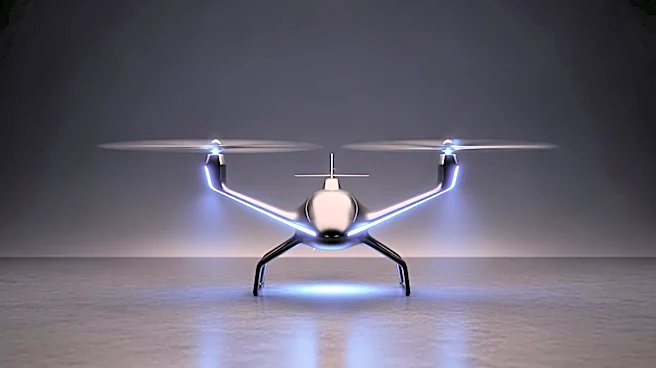
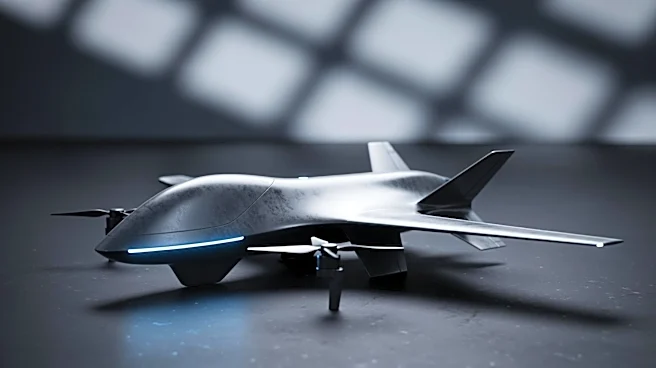
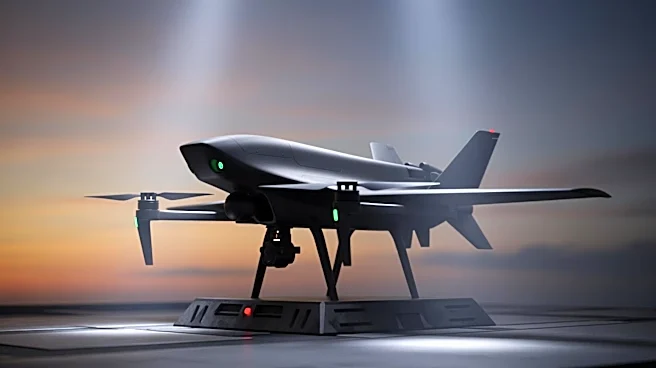
Joby Aviation, in collaboration with L3Harris Technologies, is set to demonstrate its S4-T hybrid-electric vertical-takeoff-and-landing (eVTOL) uncrewed aircraft for the U.S. Army. The demonstration will take place at Joby's plant in California. The S4-T,
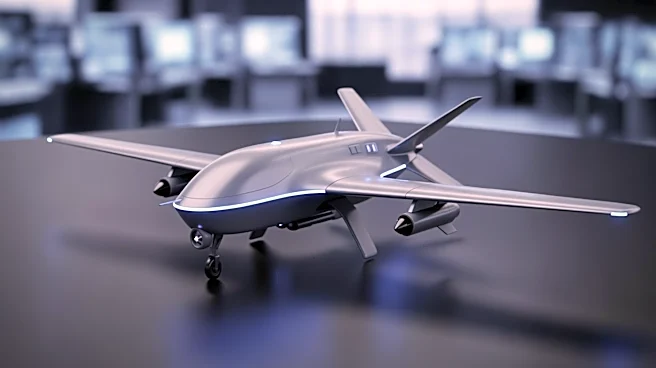
which first flew in November 2025, is designed for defense applications, offering capabilities such as reconnaissance, surveillance, and target acquisition. The aircraft features a turbine-hybrid propulsion system and is modular and scalable, allowing for various mission roles. The U.S. Army is exploring options to replace its current fixed-wing General Atomics MQ-1C Gray Eagle with a new Group 4+ short/vertical-takeoff-and-landing (S/VTOL) UAS, and Joby's S4-T is a contender in this initiative.
Why It's Important?
The demonstration of Joby's S4-T eVTOL aircraft represents a significant advancement in military aviation technology, potentially transforming how the U.S. Army conducts reconnaissance and surveillance missions. The hybrid-electric design offers enhanced operational flexibility and efficiency, which could lead to reduced operational costs and increased mission effectiveness. The Army's interest in replacing the MQ-1C Gray Eagle with a more versatile and efficient aircraft underscores the growing importance of advanced air mobility solutions in defense applications. Success in this demonstration could position Joby and L3Harris as key players in the future of military aviation technology.
What's Next?
Following the demonstration, the U.S. Army is expected to release a request for proposals for the new S/VTOL UAS this summer. Joby and L3Harris are preparing to deliver prototypes by the fourth quarter of 2028, which will be tested by two different Combat Aviation Brigade units. The Army's initiative to accelerate the fielding of new technologies could lead to further collaborations and developments in the advanced air mobility sector. Other competitors, such as Archer Aviation and Boeing, are also developing similar technologies, indicating a competitive landscape in the defense aviation market.