




What's Happening?
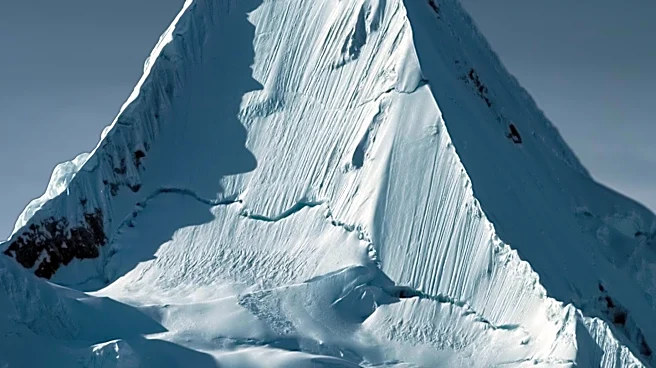
A German-Turkish research team has conducted the first-ever survey of the glacier ice on Mount Ararat in eastern Turkey. The team, working at over 5,000 meters above sea level, aimed to determine if the ice preserves a unique archive of climate and cultural
history. Using ground-based radio echo sounding and seismic techniques, they mapped the ice thickness and subglacial bed. The survey is part of a larger project to recover ice cores that could provide valuable data on past climates and human activity. The ice cap is rapidly shrinking due to global warming, making this research timely and critical.
Why It's Important?
The survey of Mount Ararat's glacier ice is crucial for understanding the region's climate history and its impact on early civilizations. The ice cores could reveal data on past atmospheric conditions, volcanic eruptions, and human activities, offering insights into historical climate phases like the Roman Climate Optimum. This research is particularly significant as it could fill gaps in the understanding of climate history in the Middle East, a region with limited glaciological studies. The findings could inform future climate models and conservation efforts, highlighting the importance of preserving such natural archives.