

What's Happening?
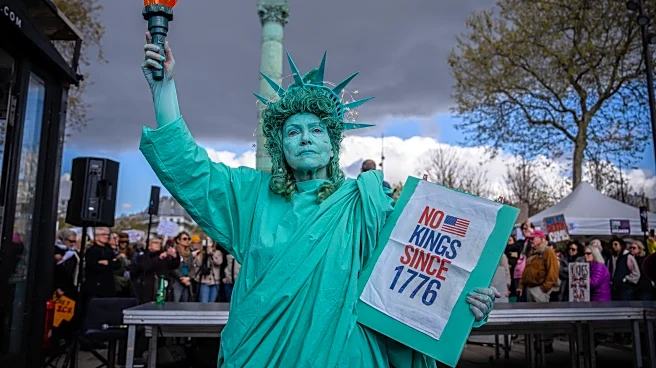
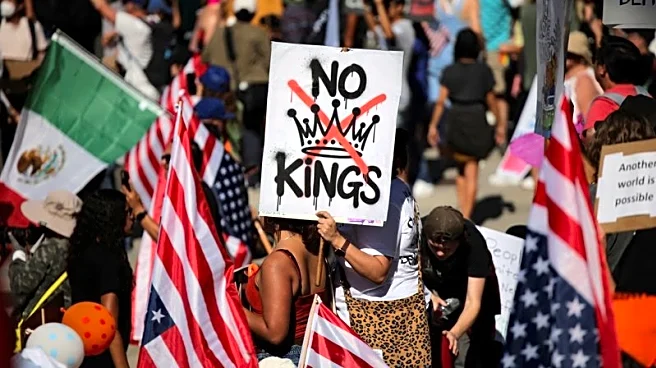
Thousands of demonstrators gathered in Chicago's Grant Park for the 'No Kings' rally to protest against President Trump's policies. The event featured colorful posters, international flags, and pro-democracy slogans. Participants expressed opposition
to various issues, including the U.S. war with Iran, immigration policies, and healthcare reforms. The rally was part of a larger movement with over 3,100 events registered across all 50 states. Attendees included veterans, activists, and families, all voicing concerns over the administration's actions and their impact on democracy and civil rights.
Why It's Important?
The 'No Kings' rally highlights widespread public dissent against President Trump's administration, reflecting broader national and international discontent. The protest underscores significant societal concerns, such as immigration policies, healthcare access, and women's rights. These issues have far-reaching implications for U.S. domestic policy and international relations. The rally also demonstrates the power of grassroots movements in shaping public discourse and influencing political agendas. As citizens mobilize to express their dissatisfaction, it signals potential challenges for the administration in maintaining public support and addressing these contentious issues.
What's Next?
The rally is likely to intensify calls for policy changes and could influence upcoming elections. Political leaders may face increased pressure to address the concerns raised by protesters, particularly regarding immigration, healthcare, and foreign policy. The administration's response to these protests could impact its political standing and future legislative priorities. Additionally, continued public activism may lead to more organized efforts to challenge current policies and advocate for reforms, potentially shaping the political landscape in the lead-up to future elections.
Beyond the Headlines
The rally reflects deeper societal divisions and the growing polarization in U.S. politics. It raises questions about the role of civic engagement in a democracy and the effectiveness of protests in enacting change. The event also highlights the intersection of various social justice issues, such as racial equality, gender rights, and economic disparities, which are increasingly interconnected in public discourse. As these movements gain momentum, they may drive long-term shifts in cultural and political attitudes, influencing future policy directions and societal norms.