

What's Happening?
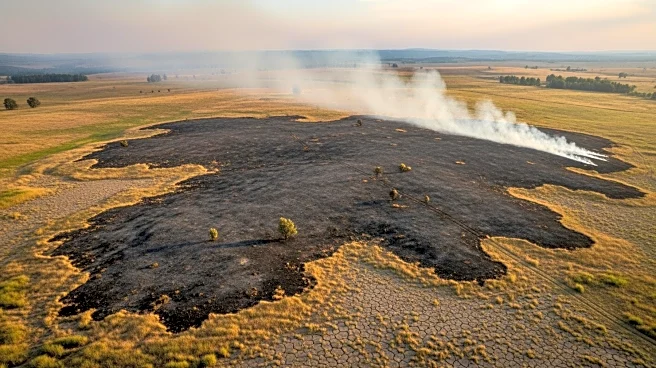
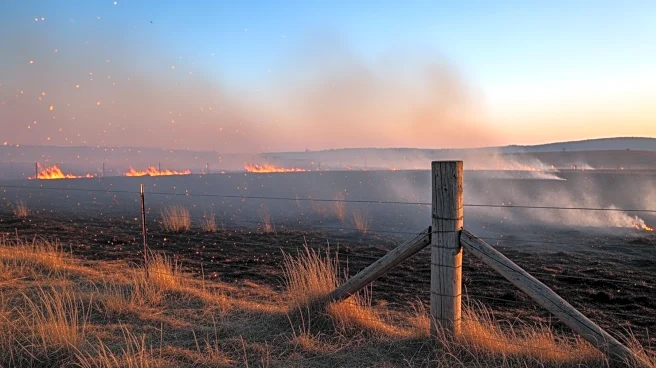
Wildfires have ravaged pasture lands across the U.S. Plains, particularly in Oklahoma and Kansas, leading to significant cattle losses and the destruction of grazing resources. The Ranger Road Fire alone has burned approximately 283,283 acres, leaving
ranchers scrambling for hay donations to feed their herds. The fires have exacerbated an already critical situation, as U.S. cattle supplies are at their lowest in 75 years due to previous droughts and high prices that pushed ranchers to slaughter more cattle. The fires have not only killed cattle but also left surviving animals without food, prompting urgent efforts to secure feed from other states.
Why It's Important?
The destruction of grazing lands poses a severe threat to the U.S. beef industry, which is already struggling with low cattle supplies. This situation could lead to further increases in beef prices, which have already reached record highs. The fires highlight the vulnerability of the agricultural sector to natural disasters and the potential for significant economic impacts. The loss of cattle and grazing resources could also affect the livelihoods of ranchers and the broader agricultural community, emphasizing the need for effective disaster management and support systems.
What's Next?
Efforts are underway to contain the wildfires and provide immediate relief to affected ranchers. Donations of hay and other supplies are being coordinated by organizations like the Kansas Livestock Association. However, the recovery of pasture lands will take time, and ranchers may face long-term challenges in rebuilding their herds and restoring their operations. The situation may prompt discussions on improving fire management strategies and support mechanisms for the agricultural sector to better withstand such disasters in the future.