


What's Happening?
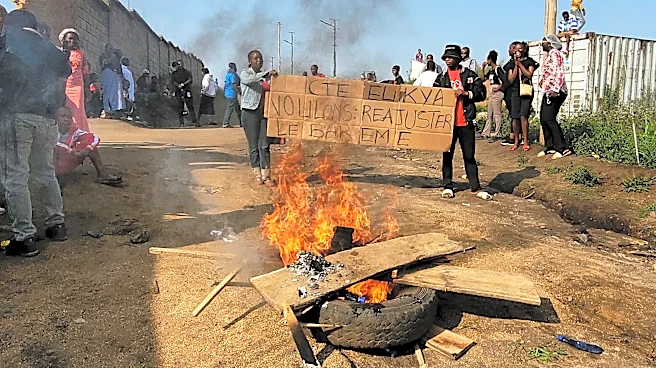
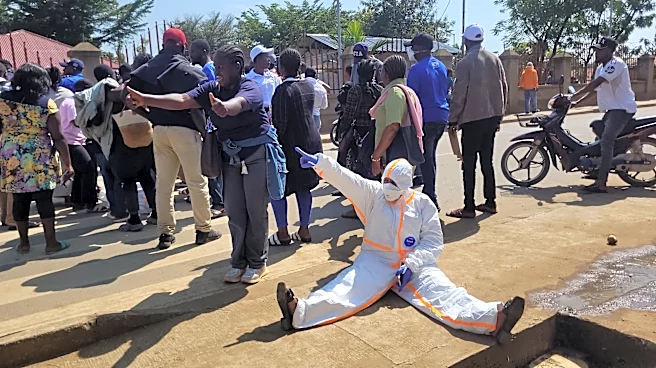
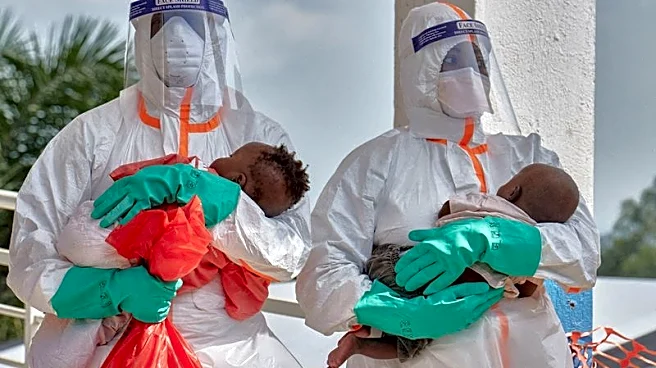
Health workers in Bunia, Ituri province, Democratic Republic of the Congo, have gone on strike due to unpaid wages and bonuses since the Ebola outbreak was declared in mid-May. The protests come as the outbreak reaches 3,973 confirmed cases and 1,801
deaths, making it the second-largest Ebola outbreak on record. The workers' strike highlights logistical issues and poor welfare conditions for front-line responders, exacerbating the challenges in controlling the virus's spread.
Why It's Important?
The strike by health workers underscores the critical need for adequate support and compensation for those on the front lines of health crises. The lack of payment and logistical challenges could hinder efforts to contain the outbreak, potentially leading to further spread and increased fatalities. The situation highlights the importance of addressing systemic issues in healthcare infrastructure and ensuring timely support for responders.
What's Next?
Authorities may need to prioritize resolving payment issues and improving conditions for health workers to ensure effective response efforts. International organizations could increase support and funding to address logistical challenges and enhance healthcare infrastructure. Monitoring the outbreak's progression and adjusting strategies based on developments will be crucial.
Beyond the Headlines
The protests reflect broader challenges in managing health crises in conflict-affected regions. The situation may prompt discussions on improving healthcare access and infrastructure in vulnerable areas. The strike highlights the need for systemic changes to ensure timely support and compensation for health workers.