








What's Happening?
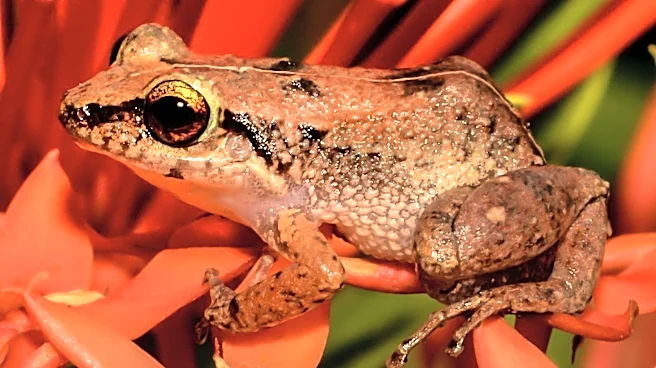
Researchers at the Japan Advanced Institute of Science and Technology have discovered a bacterium from the intestines of Japanese tree frogs that exhibits significant anticancer properties in mice. The bacterium, Ewingella americana, was isolated and tested
in a mouse model of colorectal cancer, where a single intravenous dose resulted in a complete elimination of tumors. This approach differs from traditional methods that focus on altering gut microbiota, as it involves directly targeting tumors with living bacteria. The bacterium thrives in low-oxygen environments typical of tumors, allowing it to multiply and attack cancer cells while also stimulating an immune response. The study, published in Gut Microbes, suggests a new direction for cancer treatment using naturally occurring bacteria.
Why It's Important?
This discovery could revolutionize cancer treatment by providing a new method that directly targets tumors with living bacteria, potentially offering an alternative to conventional therapies like chemotherapy and immune checkpoint inhibitors. The ability of E. americana to specifically accumulate in tumors without affecting healthy tissues highlights its potential for targeted therapy, reducing the risk of side effects associated with traditional treatments. If further research confirms its efficacy in humans, this approach could lead to new treatments for various types of cancer, particularly those that are resistant to current therapies. The study also underscores the importance of exploring biodiversity for medical advancements, opening up possibilities for novel therapeutic options.
What's Next?
Future research will focus on testing the bacterium's effectiveness against other types of solid tumors, such as breast and pancreatic cancers. Researchers plan to optimize treatment methods, including dose fractionation and direct tumor injection, and explore combinations with existing therapies to enhance efficacy. The findings pave the way for clinical trials to determine the safety and effectiveness of this approach in humans. If successful, this could lead to the development of new bacterial therapies for cancer, offering hope for patients with difficult-to-treat cancers.