





What's Happening?
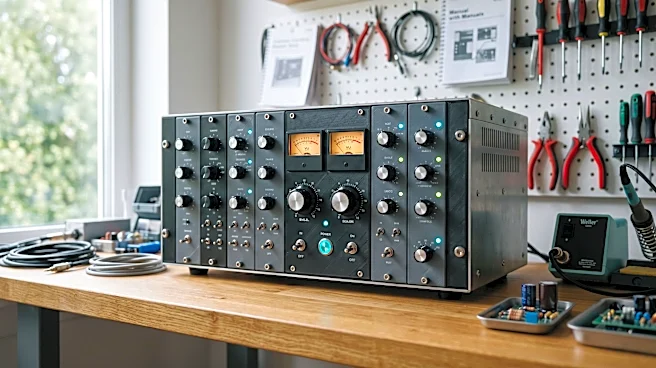
A hobbyist, [BorisDigital], has constructed a compact analog TV station designed to replicate the functionality and appearance of a professional broadcast setup from the 1990s. This 10-inch rack system is equipped with various components, each performing
a specific broadcast function. It includes a transmitter, a clock and audio monitor powered by a Pi Pico, and a vectorscope, waveform monitor, and display driven by Raspberry Pi 5s with USB video digitizers. The station also features two SD card video record/play units, also utilizing Raspberry Pi technology, and an automatic scheduler. The front panels of the rack are 3D printed with different filaments for lettering, providing a robust and stylish finish. This project addresses the challenge faced by collectors of older televisions who lack analog transmissions to tune into, offering a way to use vintage sets as they were originally intended.
Why It's Important?
This development is significant for enthusiasts of vintage technology and broadcast history in the U.S., as it provides a practical solution for preserving and experiencing analog television. With the complete cessation of analog TV broadcasts in the U.S. years ago, collectors and hobbyists have been limited in their ability to fully utilize their vintage equipment. This DIY station allows for the creation of personal analog broadcasts, fostering a niche community and potentially inspiring further innovation in retro technology. It also highlights the versatility and accessibility of modern microcomputing platforms like Raspberry Pi, enabling complex projects that were once prohibitively expensive or technically challenging. The project demonstrates how readily available components can be combined to recreate sophisticated systems, offering educational value in electronics and broadcasting.
What's Next?
The creator's project could inspire other hobbyists to build similar analog TV stations, potentially leading to a resurgence of interest in vintage broadcast technology and DIY electronics. The modular design, heavily reliant on Raspberry Pi and 3D printing, suggests that variations and improvements could emerge from the community. Future developments might include integrating more advanced features, expanding broadcast range, or creating content specifically tailored for analog transmission. The use of 3D printing for custom components also points to a growing trend in personalized electronics projects, where individuals can design and fabricate parts to meet specific needs. This could lead to workshops or online communities dedicated to building and operating personal analog broadcast systems.
Beyond the Headlines
Beyond its immediate utility for vintage TV enthusiasts, this project touches upon broader themes of technological obsolescence and preservation. In an increasingly digital world, analog technologies are often discarded, yet they hold cultural and historical significance. Projects like this demonstrate a desire to reconnect with older forms of media and understand the underlying principles of their operation. It also underscores the 'maker' culture, where individuals leverage accessible tools and knowledge to create complex systems, challenging the notion that advanced technology is solely the domain of large corporations. The blend of modern computing (Raspberry Pi) with vintage broadcast principles highlights a fascinating intersection of old and new, fostering a deeper appreciation for the evolution of media technology and the ingenuity of individual creators.