



What's Happening?
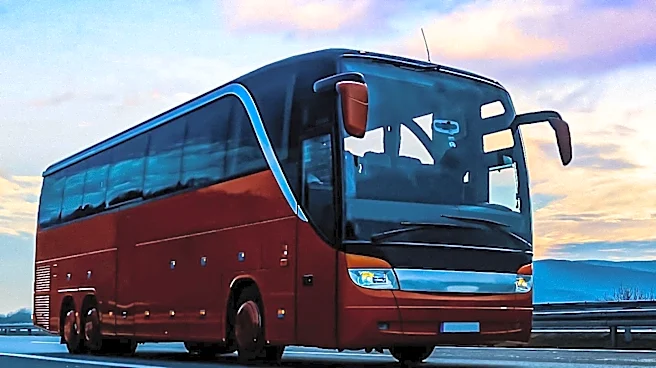
One person has died after a tour bus caught fire on the 60 Freeway near Hacienda Heights in Los Angeles on Friday morning. The Los Angeles County Fire Department received a call about a traffic collision involving a fire around 5:39 a.m. near the eastbound
60 Freeway, west of Azusa Avenue. Fire officials believe the blaze originated in the engine area of the bus. During their response, crews discovered cargo and propane tanks both inside and underneath the tour bus. The identity of the deceased individual has not been released, and authorities have not disclosed the bus's origin or intended destination. The Los Angeles County Fire Department has not yet provided additional information regarding the incident. This is an ongoing and developing story, with further details expected as the investigation progresses.
Why It's Important?
This incident highlights critical safety concerns related to commercial passenger vehicles, particularly tour buses, and the potential hazards associated with their operation and maintenance. The presence of propane tanks and cargo within or beneath the bus raises questions about safety regulations, inspection protocols, and the storage of flammable materials on public transportation. The fatality underscores the severe consequences when such incidents occur, prompting a need for thorough investigation into the cause of the fire, which could range from mechanical failure to improper storage or maintenance. This event could lead to increased scrutiny of tour bus operators, potentially influencing regulatory bodies to review and possibly tighten safety standards for vehicle design, maintenance, and onboard storage. For the public, it serves as a stark reminder of the importance of transportation safety and the potential risks involved in travel, particularly on long-distance routes. The incident also impacts emergency response protocols, demonstrating the challenges faced by fire departments in managing complex vehicle fires on major freeways.
What's Next?
Authorities will conduct a thorough investigation to determine the exact cause of the tour bus fire and the circumstances leading to the fatality. This investigation will likely involve examining the bus's maintenance records, inspecting the engine area for mechanical failures, and assessing the storage of cargo and propane tanks. The identity of the victim will likely be released pending notification of next of kin. Depending on the findings, there could be implications for the tour bus company involved, potentially leading to legal actions, fines, or changes in operational procedures. Regulatory agencies, such as the Federal Motor Carrier Safety Administration (FMCSA) and state transportation departments, may review existing safety regulations for commercial passenger vehicles, especially concerning fire prevention and the transport of hazardous materials like propane. This incident could also prompt public safety campaigns to educate passengers and operators on emergency procedures and fire safety on buses. Further updates are expected as the investigation unfolds.
Beyond the Headlines
Beyond the immediate tragedy, this incident brings to light broader issues concerning the safety infrastructure of public transportation and the regulatory environment governing it. The discovery of propane tanks on the bus, while not explicitly stated as the cause of the fire, raises questions about the types of materials permitted on passenger vehicles and the enforcement of such rules. This could spark a wider debate on the balance between convenience (e.g., for cooking or heating on long tours) and safety risks. Furthermore, the incident underscores the often-overlooked aspect of vehicle maintenance and the potential for catastrophic failures when proper protocols are not rigorously followed. It also highlights the psychological impact on first responders and the public who witness such events, contributing to a collective sense of vulnerability. In the long term, this event could contribute to a re-evaluation of how safety is prioritized in the commercial transportation sector, potentially leading to technological advancements in fire suppression systems for buses and more stringent oversight to prevent similar tragedies.