
What's Happening?
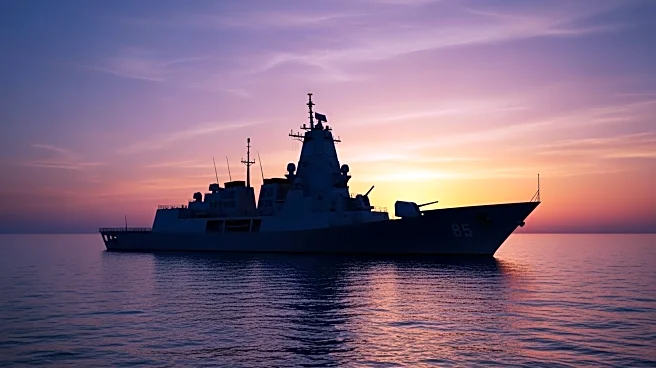
A Russian naval task group, consisting of the frigate Marshal Shaposhnikov, the corvette Gremyashchy, and the large sea tanker Boris Butoma, has completed a long-distance voyage from Russia's Pacific Coast
to the Red Sea. The flotilla departed Vladivostok on October 1 and reached the Red Sea by December 6. This deployment is part of Russia's strategy to maintain a naval presence in strategically important regions, including the Mediterranean Sea. The task group made several stops along the way, including in Vietnam, Thailand, Myanmar, and Indonesia, before splitting into two groups. The Gremyashchy continued its deployment in the Indo-Pacific region, while the Marshal Shaposhnikov and Boris Butoma headed towards the Red Sea.
Why It's Important?
The deployment of the Russian Pacific Fleet to the Red Sea underscores Russia's intent to project power and maintain a presence in key maritime regions. This move is significant as it demonstrates Russia's ongoing commitment to naval diplomacy and its strategic interests in the Mediterranean and surrounding areas. The presence of Russian naval forces in the Red Sea, a critical maritime route, could influence regional security dynamics and signal Russia's readiness to engage in naval exercises with allied nations. This deployment also reflects Russia's broader military strategy to assert its influence in global maritime affairs.
What's Next?
It remains to be seen whether the Russian naval vessels will conduct joint exercises with other naval forces, such as a Chinese task group currently in the Gulf of Aden. Such collaborations could further strengthen military ties between Russia and China. Additionally, the continuation of Russian naval deployments in the region may prompt responses from other global powers with interests in the Red Sea and Mediterranean areas. The strategic implications of these deployments will likely be monitored closely by international observers.