








What's Happening?
Ukraine has intensified its use of drones to target Russian oil infrastructure, with a recent attack on a facility in the Perm region, over 1,500 kilometers from Ukraine. This attack is part of a broader strategy to disrupt Russia's energy infrastructure, which
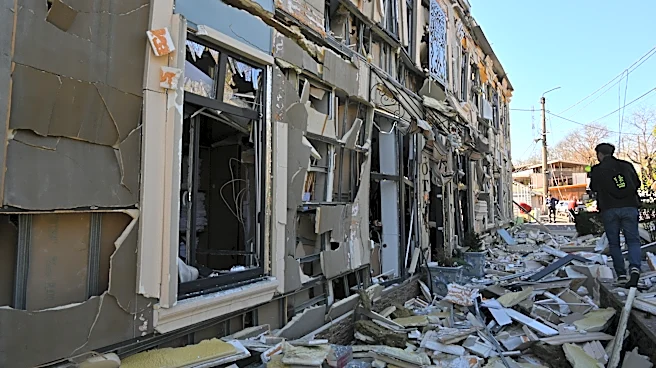
is crucial for its war efforts. Ukrainian President Volodymyr Zelenskyy highlighted the increased range and precision of Ukraine's drone strikes, marking a new phase in their military strategy. The Ukrainian Security Service claimed responsibility for the attack, stating that it targeted a key oil hub owned by Russia's pipeline operator, Transneft. This development comes amid ongoing Russian attacks on Ukrainian civilian areas, causing significant damage and casualties.
Why It's Important?
The escalation in drone warfare signifies a shift in Ukraine's military capabilities and strategy, potentially altering the dynamics of the conflict. By targeting Russia's energy infrastructure, Ukraine aims to cut off a vital source of revenue for Russia, thereby weakening its ability to sustain military operations. This move could have significant economic implications, not only for Russia but also for global energy markets, given the potential disruption in oil supplies. Additionally, Ukraine's advancements in drone technology and its ability to conduct long-range strikes may attract international interest and support, further influencing geopolitical alliances and military strategies.
What's Next?
Ukraine's continued focus on expanding its drone capabilities suggests that further strikes on Russian infrastructure are likely. This could provoke a stronger military response from Russia, potentially escalating the conflict. Internationally, Ukraine's proposal for cooperation on drones and defense systems with the United States and other countries could lead to increased military support and collaboration. The situation remains volatile, with potential implications for global energy markets and international relations.