








What's Happening?
The Embassy of India in Bogota has updated its procedures for visa fee payments for applicants residing in Colombia and Ecuador. Applicants in Colombia are now required to pay the prescribed visa fee via an in-person bank deposit at Banco de Occidente,
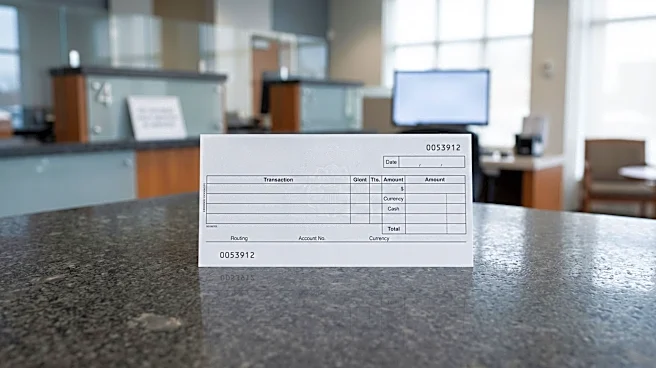
into the Embassy of India's current account (Account No.: 219927969). An original bank deposit slip or payment receipt must be submitted with the visa application documents. An additional payment option is available for online payments, where applicants can contact the Embassy to request a QR Code. For applicants in Ecuador, payments should continue to be made through Banco Pichincha C.A. into the Embassy's current account (Account No.: 3460152804), following existing procedures. The Embassy explicitly states that cash payments, personal checks, company checks, and bank transfers are not accepted. Applicants are also advised that visa fees for paper visas differ from those for Indian e-Visas, and e-Visa applicants should consult the official Indian e-Visa portal for relevant fees and procedures.
Why It's Important?
These updated payment procedures are crucial for individuals in Colombia and Ecuador seeking to obtain visas for India, including U.S. citizens residing in these countries. The clear guidelines aim to streamline the application process and prevent delays caused by incorrect payment methods. By specifying bank deposit as the primary method and offering an online QR code option, the Embassy is enhancing efficiency and accessibility for applicants. The distinction between paper visa fees and e-Visa fees is also important, as it ensures applicants are aware of the correct costs and payment channels, preventing potential financial discrepancies. For U.S. citizens and other foreign nationals in these regions, understanding and adhering to these rules is essential for successful visa applications, impacting their travel plans for business, tourism, or other purposes to India.
What's Next?
Applicants in Colombia and Ecuador planning to apply for an Indian visa must strictly follow these updated payment instructions. They should ensure that the correct visa fee is deposited and that the original deposit slip or payment receipt is submitted with their application. The Embassy also stipulates that applications must be submitted within three months of payment, after which the fee will lapse without a refund. This necessitates timely submission of documents after payment. For those opting for the online payment method, contacting the Embassy for the QR Code will be the initial step. The Embassy has provided contact information for any difficulties regarding visa or consular fee payments, indicating a channel for support and clarification for applicants navigating these new procedures.
Beyond the Headlines
The standardization of visa fee payment methods by embassies, as seen with the Embassy of India in Bogota, reflects a broader trend towards digitizing and formalizing international administrative processes. While aiming for efficiency, such changes can sometimes pose challenges for applicants unfamiliar with specific banking systems or digital payment platforms. The explicit exclusion of cash, personal checks, and bank transfers highlights a move towards more secure and traceable financial transactions in diplomatic services. This shift also underscores the importance of clear communication from diplomatic missions to ensure that all applicants, including U.S. citizens abroad, are well-informed and can comply with the requirements, thereby facilitating international travel and relations. Such procedural updates are common across various embassies and consulates globally, impacting international mobility and cross-border interactions.