


What's Happening?
A Russian cargo spacecraft, Progress 94, encountered a technical issue shortly after its launch towards the International Space Station (ISS) on March 22. The spacecraft, launched atop a Soyuz rocket from the Baikonur Cosmodrome in Kazakhstan, experienced
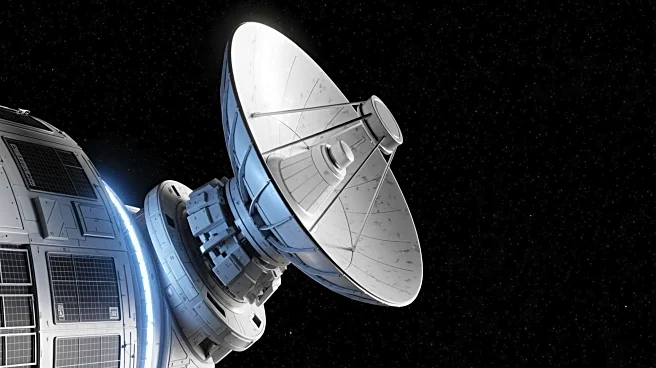
a problem with one of its antennas, which failed to deploy as planned. This antenna is crucial for the automatic docking process with the ISS. Despite this setback, all other systems on the spacecraft are functioning correctly, and the mission is expected to proceed as scheduled. NASA has indicated that if the antenna issue cannot be resolved, Roscosmos cosmonaut Sergey Kud-Sverchkov will manually pilot the spacecraft using a backup system to ensure a successful docking. Progress 94 is carrying approximately 3 tons of supplies, including food and propellant, to support the astronauts currently aboard the ISS. The spacecraft is scheduled to dock with the ISS's Poisk module on March 24, replacing the Progress 92, which recently undocked.
Why It's Important?
The successful delivery of supplies to the ISS is critical for the ongoing operations and well-being of the astronauts aboard. The Progress 94 mission underscores the importance of international collaboration in space exploration, as it involves coordination between Russian and American space agencies. The antenna glitch highlights the challenges and complexities of space missions, where even minor technical issues can have significant implications. The ability to troubleshoot and adapt, as demonstrated by the contingency plans involving manual docking, is essential for the success of such missions. This incident also emphasizes the reliance on expendable cargo spacecraft like Progress, which play a vital role in maintaining the ISS's supply chain. The outcome of this mission could influence future protocols and designs for spacecraft to enhance reliability and safety.
What's Next?
If the antenna issue persists, Roscosmos cosmonaut Sergey Kud-Sverchkov will manually dock the Progress 94 spacecraft using a backup system. This manual intervention will be closely monitored to ensure the safety and success of the docking process. The spacecraft is expected to remain docked to the ISS for about six months, after which it will be loaded with waste and sent to burn up in Earth's atmosphere. The incident may prompt a review of the spacecraft's design and operational procedures to prevent similar issues in future missions. Additionally, the performance of the manual docking system will be evaluated to assess its effectiveness as a backup solution.