
What's Happening?
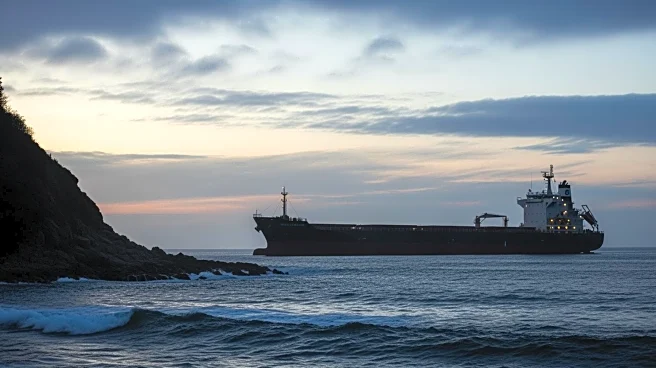
The UK Ministry of Defence has expelled a Russian cargo ship, Sinegorsk, from the Bristol Channel due to security concerns. The ship, which had anchored close to critical undersea telecom cables, was deemed
suspicious by UK authorities. The Sinegorsk, sailing under the Russian flag, claimed to be making essential safety repairs when it entered the channel. However, its proximity to vital infrastructure raised alarms, prompting a response from the UK Coastguard and a Wildcat helicopter from Royal Naval Air Station Yeovilton. The ship was ordered to leave UK waters, a directive it complied with, heading south past the English Channel.
Why It's Important?
This incident underscores the heightened tensions between the UK and Russia, particularly concerning maritime security and the protection of critical infrastructure. The presence of Russian vessels in UK waters has increased by 30% over the past two years, raising concerns about potential espionage or sabotage activities. The Sinegorsk's proximity to undersea cables, which are crucial for international communications, highlights vulnerabilities in infrastructure security. This event may prompt the UK to enhance its maritime surveillance and defense measures, impacting international relations and security policies.
What's Next?
The UK is likely to increase its monitoring of Russian vessels in its waters, potentially leading to more stringent maritime security protocols. This could involve closer collaboration with international allies to safeguard critical infrastructure. The incident may also influence diplomatic relations between the UK and Russia, with potential discussions on maritime conduct and security. Additionally, the UK may review its policies on foreign vessels entering its waters, particularly those from nations with strained relations.