





What's Happening?
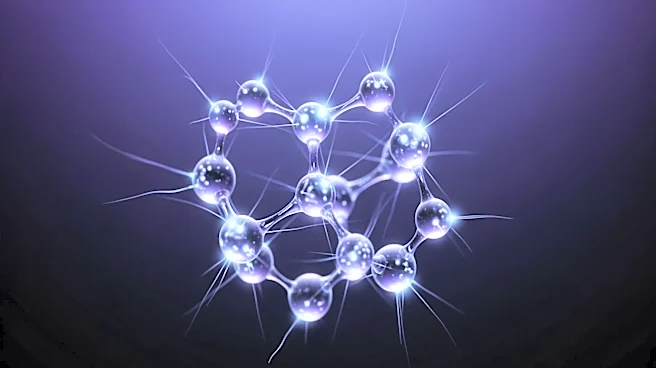
Researchers at the University of Queensland have developed a molecular 'light switch' for the hormone oxytocin, often referred to as the 'love hormone'. This innovation allows scientists to release oxytocin in the brain with high precision using light,
enabling the study of its effects on individual synapses, neurons, and neuronal circuits. The research, led by Professor Markus Muttenthaler, aims to provide insights into how social behaviors and emotions are wired in the brain. Oxytocin is known to play a crucial role in social connections, including trust, bonding, and emotional regulation. The study, published in Angewandte Chemie International Edition, could lead to improved therapies for conditions linked to changes in oxytocin signaling, such as autism, anxiety, and depression.
Why It's Important?
The development of this molecular 'light switch' is significant as it offers a new tool for neuroscientists to study the brain's complex signaling pathways with unprecedented precision. Understanding oxytocin's role in social behavior and emotional regulation could lead to breakthroughs in treating mental health disorders. The ability to control and observe oxytocin release in specific brain regions may help differentiate cause from effect in social and emotional behaviors, potentially leading to targeted therapies for conditions like autism and PTSD. This research also opens avenues for studying other neuropeptides, broadening the scope of neurological and psychological research.