

What's Happening?
The National Transportation Safety Board (NTSB) has expressed strong opposition to a provision in the U.S. House-passed National Defense Authorization Act (NDAA) that permits military air training missions in Washington D.C. This comes nearly a year after
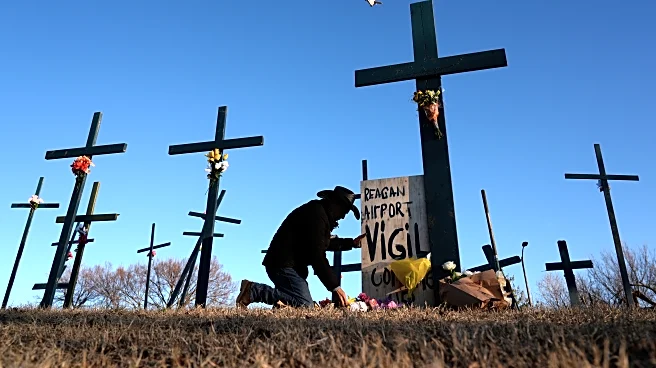
a fatal midair collision in the area resulted in 67 deaths. The NDAA, a $900 billion defense spending bill, includes Section 373, which allows military departments to conduct training missions around Ronald Reagan Washington National Airport. NTSB Chair Jennifer Homendy has criticized this provision, stating it undermines safety improvements made after the January 2025 crash between a PSA Airlines CRJ700 and a Sikorsky UH60 helicopter. The NTSB's ongoing investigation into the crash has highlighted gaps in traffic awareness and collision-avoidance technologies. The provision in the NDAA would roll back requirements for military aircraft to broadcast their position, a measure previously agreed upon by the FAA and Department of Defense.
Why It's Important?
The inclusion of Section 373 in the NDAA has significant implications for air safety in the Washington D.C. area. The NTSB's opposition underscores concerns that the provision could lead to increased risks of midair collisions by allowing military aircraft to operate under less stringent safety protocols. This has raised alarms among lawmakers and families of crash victims, who argue that the provision fails to address the visibility and coordination issues that contributed to the January 2025 tragedy. The potential rollback of safety measures could affect not only military operations but also civilian air traffic, posing broader risks to public safety. The controversy highlights the tension between national security interests and aviation safety, with stakeholders calling for more stringent safety standards to prevent future incidents.
What's Next?
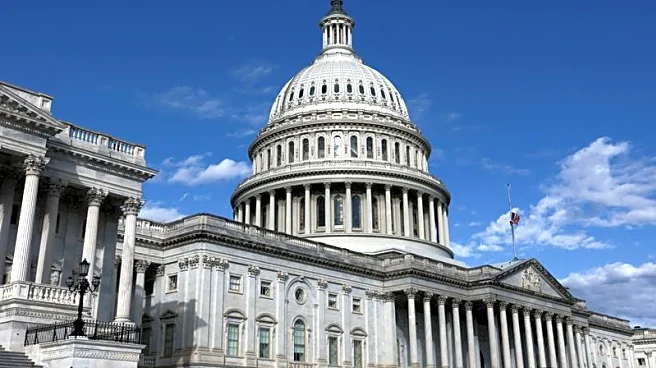
The debate over Section 373 is likely to continue as the NDAA moves through the legislative process. Lawmakers, including members of the Senate Committee on Commerce, Science, and Transportation, have called for the removal of the provision, advocating instead for the ROTOR Act, which would enforce stricter safety standards for military aircraft. The families of crash victims are also urging Congress to strengthen safety requirements. The outcome of this legislative battle will have significant implications for air safety regulations and military training protocols in the D.C. area.