








What's Happening?
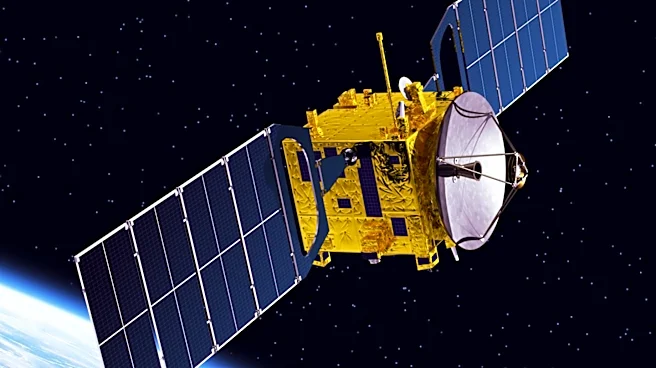
The U.S. Space Force (USSF) and Boeing have reached a $2 billion agreement to extend the life of the Mobile User Objective System (MUOS) satellite communications constellation. This deal involves the development and procurement of two new space vehicles,
SV 6 and SV 7, which are expected to launch by 2031 and 2032, respectively. The MUOS system, initially designed to replace older ultrahigh-frequency satellite communications, plays a critical role in providing secure and reliable communication for military operations. The new satellites will extend the operational lifespan of the MUOS constellation to 2035.
Why It's Important?
The extension of the MUOS satellite system is crucial for maintaining the U.S. military's communication capabilities. As global security dynamics evolve, reliable satellite communications are essential for coordinating military operations and ensuring national security. The investment in new satellites reflects the U.S. commitment to maintaining technological superiority in space-based communications. This deal also highlights the importance of public-private partnerships in advancing defense technologies and supporting the U.S. aerospace industry.
What's Next?
Boeing will proceed with the design and construction of the new satellites, with integration and testing phases to follow. The USSF will oversee the project, ensuring that the new satellites meet the required specifications and are ready for deployment within the planned timeline. As the project progresses, there may be opportunities for further collaboration with other defense contractors and international partners. The successful deployment of the new satellites will be a critical step in ensuring the continued effectiveness of the MUOS system.