







What's Happening?
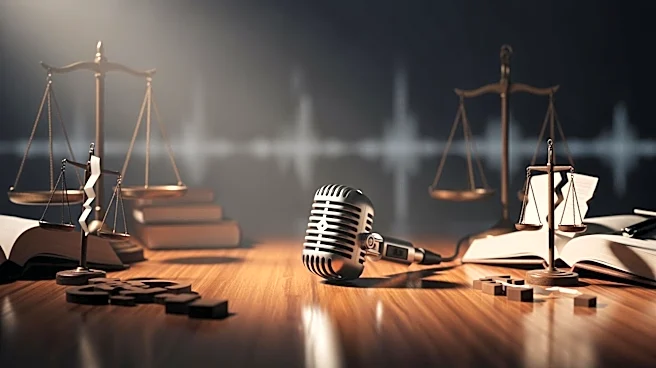
A recent episode of a New York Times podcast featured Twitch streamer Hasan Piker and New Yorker staff writer Jia Tolentino discussing the concept of lawbreaking as a form of resistance against perceived tyranny. The conversation, hosted by Nadja Spiegelman,
explored the idea that acts such as shoplifting from major grocery chains and streaming services could be justified as these entities allegedly exploit workers and consumers. Piker and Tolentino expressed support for these actions, framing them as a response to systemic injustices. The discussion also touched on more extreme actions, such as violence against corporate executives, which the hosts did not endorse but discussed in the context of 'social murder' by health insurance companies. The podcast episode has sparked conversations about the moral implications of such acts and the role of civil disobedience in modern society.
Why It's Important?
This discussion is significant as it highlights a growing discourse around the ethics of resistance and civil disobedience in the face of perceived corporate and systemic exploitation. The conversation reflects a broader societal debate on the legitimacy of certain forms of protest and resistance, particularly in an era where economic inequality and corporate power are increasingly scrutinized. The podcast episode underscores a shift in how some individuals view traditional moral boundaries, suggesting a potential re-evaluation of what constitutes acceptable forms of protest. This could influence public opinion and policy discussions around corporate accountability and the rights of workers and consumers.
What's Next?
The conversation is likely to continue as more individuals and groups weigh in on the ethical considerations of lawbreaking as a form of protest. It may prompt further discussions in media and academic circles about the boundaries of civil disobedience and the responsibilities of corporations towards their employees and customers. Additionally, there could be reactions from political leaders and business executives, potentially leading to policy proposals aimed at addressing the underlying issues of economic inequality and corporate practices that fuel such debates.
Beyond the Headlines
The podcast episode also raises questions about the role of media in shaping public discourse on morality and resistance. By providing a platform for such discussions, media outlets can influence public perceptions and potentially legitimize certain forms of protest. This highlights the power of media in framing societal debates and the responsibility that comes with it. Furthermore, the conversation touches on cultural shifts in how younger generations perceive authority and justice, which could have long-term implications for social movements and political engagement.