
What's Happening?
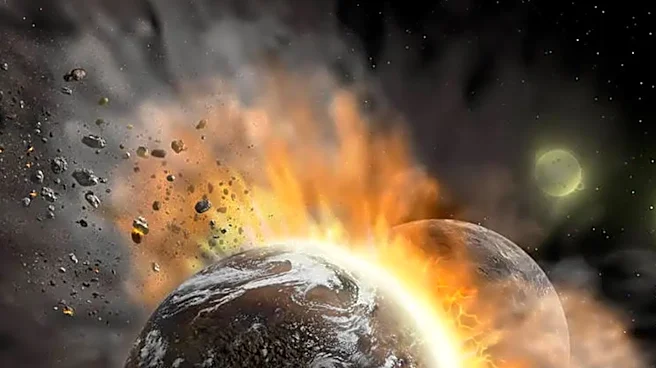
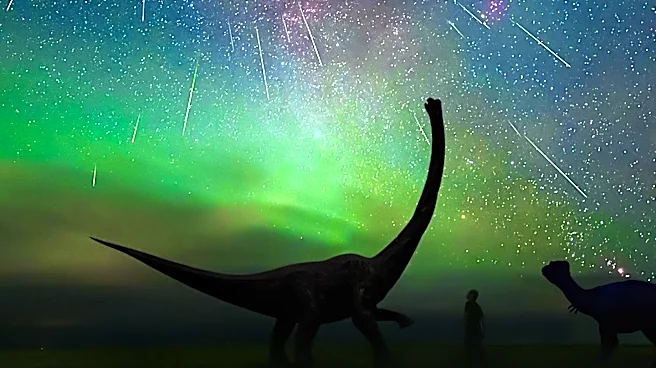
A recent study published in the Journal of Geophysical Research: Biogeosciences suggests that the dinosaurs may have been incinerated in a matter of hours following the meteorite impact 66 million years
ago. The impact, which occurred near the Yucatán Peninsula, vaporized a significant amount of material, creating a dust cloud that enveloped the Earth. This dust cloud trapped heat near the planet's surface, creating conditions similar to a grill, which could have led to the rapid extinction of dinosaurs. The study highlights the immediate and deadly role of the dust layer, contrasting with previous theories that suggested a prolonged winter caused by blocked sunlight.
Why It's Important?
This study provides a new perspective on the events that led to the mass extinction at the end of the Cretaceous Period. Understanding the rapidity and mechanisms of this extinction event is crucial for paleontologists and geologists as it sheds light on the Earth's climatic and ecological responses to catastrophic events. The findings could influence how scientists interpret other extinction events and the resilience of life on Earth. Additionally, this research may have implications for understanding current and future climate change scenarios, as it underscores the potential for rapid environmental shifts.
What's Next?
Further research is needed to confirm the study's findings and explore the global impact of the dust layer. Scientists may focus on finding additional evidence of global wildfires and examining the survival traits of species that lived through the extinction event. This could involve more detailed analysis of fossil records and sediment layers from the period. The study's authors and other researchers may also look into the broader implications of such rapid extinction events on current biodiversity and climate change models.