





What's Happening?
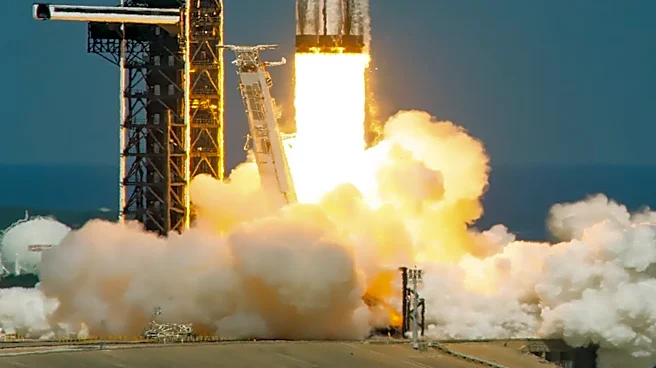
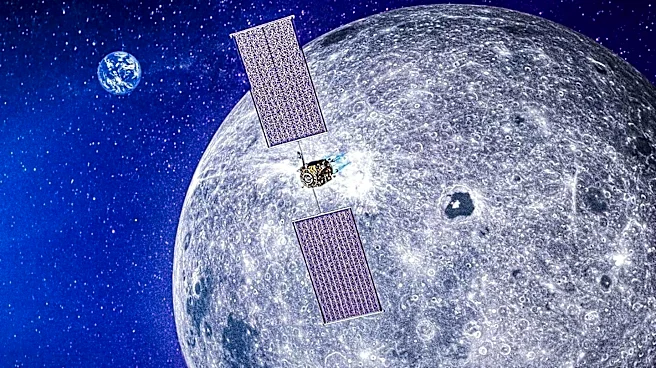
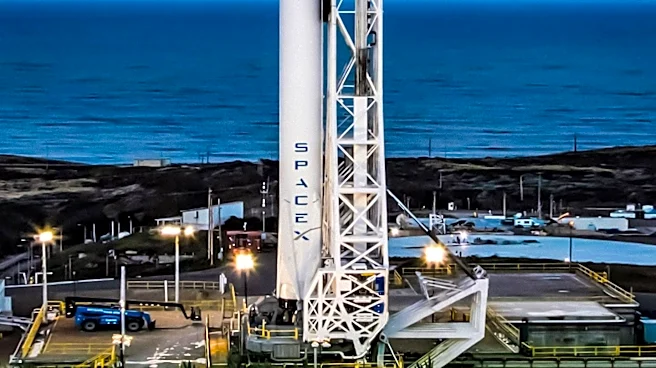
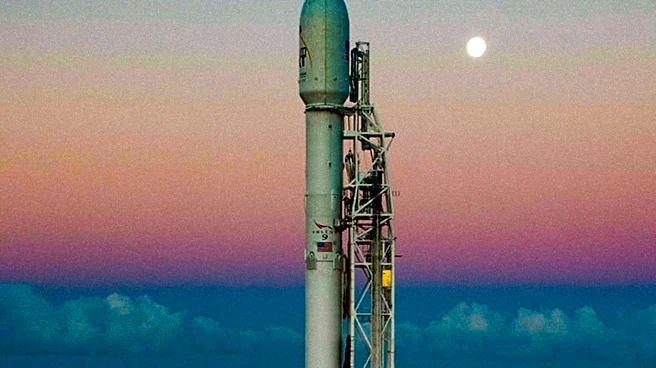
A SpaceX Falcon 9 rocket's upper stage, launched a year prior, has impacted the Moon, creating a new crater. This stage was part of a mission carrying two lunar landers, including Firefly Aerospace's Blue Ghost and Japan's Hakuto R. The upper stage drifted
in an elliptical orbit for nearly a year before being pulled by the Moon's gravity. The impact was anticipated by an independent astronomer, who accurately predicted the date and location. The collision has provided scientists with a rare opportunity to study the lunar surface and the effects of such impacts.
Why It's Important?
The impact of the Falcon 9 upper stage on the Moon is significant for scientific research, offering insights into the composition of the lunar surface. By analyzing the materials ejected during the collision, researchers can learn more about the Moon's geology. This event also highlights the challenges of managing space debris and the potential risks associated with uncontrolled objects in space. It underscores the need for effective strategies to mitigate space debris and ensure the safety of future lunar missions.
What's Next?
Scientists are expected to continue studying the impact site to gather more data on the lunar surface's composition. This research could inform future lunar exploration missions and contribute to the development of better space debris management practices. The event may also lead to discussions on international policies for space debris disposal, particularly as lunar exploration activities increase.