


What's Happening?
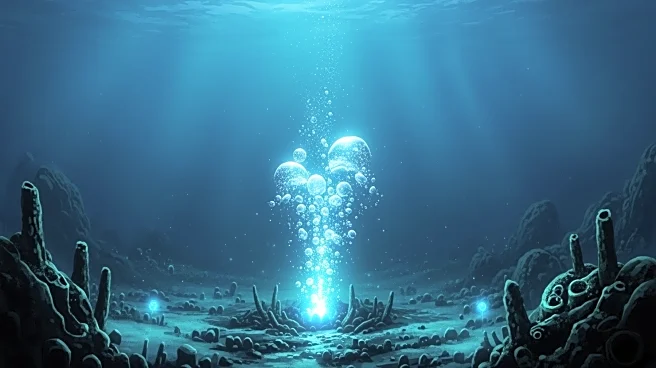
Researchers have discovered the deepest known methane seep in the Arctic, located nearly 12,000 feet below the surface on Molloy Ridge in the Greenland Sea. This discovery, led by Professor Giuliana Panieri, reveals a complex ecosystem thriving in extreme
conditions. The seep, known as the Freya Hydrate Mounds, features tall methane plumes and unique biological communities that rely on chemosynthesis. The findings suggest that these deep-sea environments are more dynamic and biologically rich than previously understood, with significant implications for biodiversity and carbon cycling in the Arctic.
Why It's Important?
The discovery of the Freya Hydrate Mounds challenges existing models of deep-sea ecosystems and highlights the potential for undiscovered biodiversity in the Arctic. These ecosystems play a crucial role in global carbon cycling, as methane hydrates store vast amounts of carbon. Understanding these systems is essential for predicting the impacts of climate change on oceanic carbon storage and for developing strategies to protect these fragile environments. Additionally, the presence of unique biological communities underscores the need for conservation efforts to preserve deep-sea biodiversity.
What's Next?
Future research will focus on exploring other potential methane seeps in the Arctic and understanding their role in global carbon cycles. This includes assessing the impact of human activities, such as deep-sea mining, on these ecosystems. Scientists aim to develop comprehensive maps of deep-sea habitats to inform conservation strategies and ensure the protection of these unique environments. Continued exploration and monitoring are vital for understanding the long-term implications of methane seep activity on climate processes and marine biodiversity.
Beyond the Headlines
The discovery of deep-sea methane seeps raises questions about the interconnectedness of ocean ecosystems and the potential impacts of climate change on these environments. It highlights the importance of international collaboration in marine research and the need for policies that balance resource extraction with environmental protection. The findings also emphasize the role of deep-sea ecosystems in global climate regulation and the importance of preserving these habitats for future generations.