
What's Happening?
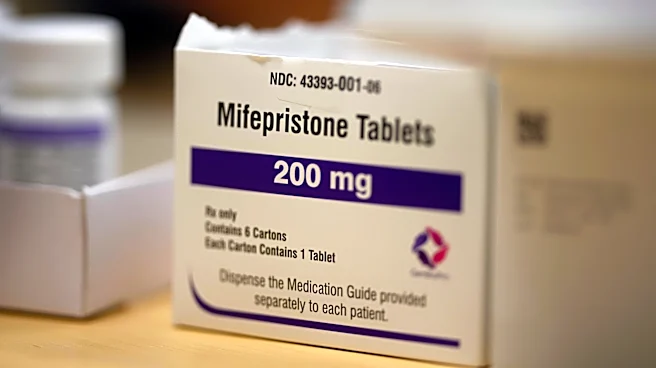
The Supreme Court is being petitioned to intervene in a legal dispute concerning the mail-order distribution of the abortion drug mifepristone. This follows a decision by the conservative 5th U.S. Circuit
Court of Appeals, which temporarily reinstated a requirement for in-person prescriptions, a rule previously relaxed by the Biden administration. Louisiana, supported by other Republican-led states, argues that mail-order access to mifepristone facilitates illegal abortions and poses health risks such as sepsis and hemorrhaging. Drug manufacturers Danco Laboratories and GenBioPro have filed emergency appeals, urging the Supreme Court to pause the lower court's ruling, which they claim disrupts established medical practices and creates confusion among healthcare providers and patients.
Why It's Important?
This legal battle over mifepristone is significant as it impacts access to abortion services across the United States, particularly in states with stringent abortion laws. The outcome could set a precedent for how abortion drugs are regulated and accessed, affecting millions of women who rely on these medications. The case also highlights the ongoing political and legal struggles surrounding reproductive rights in the U.S., with potential implications for the pharmaceutical industry and healthcare providers. The decision could either reinforce or challenge the FDA's authority in drug regulation, influencing future policies on medical access and women's health rights.
What's Next?
The Supreme Court's decision on whether to maintain or overturn the appeals court's ruling will be pivotal. If the court sides with the drug manufacturers, it could preserve mail-order access to mifepristone, maintaining the status quo for abortion services. Conversely, upholding the appeals court's decision could lead to stricter regulations and reduced access, prompting further legal challenges and legislative actions. Stakeholders, including political leaders, healthcare providers, and advocacy groups, are likely to respond vigorously, shaping the national discourse on reproductive rights and healthcare access.