


What's Happening?
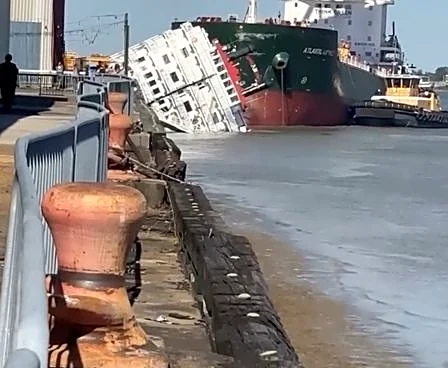
Louisiana Governor Jeff Landry has lauded the rescue operations following a collision between the tanker Atlantic Asphalt and the river cruise ship American Heritage in New Orleans. The incident occurred when the tanker reportedly lost control and struck
the paddle wheeler, which was docked, causing it to capsize. All 197 passengers aboard the American Heritage were safely evacuated from the Mississippi River. Mayor Helena Moreno described the outcome as a 'divine, godly intervention.' Thirty-two individuals were transported to hospitals with non-critical injuries, and as of Saturday, eight remained hospitalized, with two in serious but stable condition. President Trump also commended the first responders for their efforts. The US Coast Guard Captain Melanie Burnham stated that the exact reason for the tanker losing steering capabilities is under investigation, but there is no indication of terrorism. The main channel of the Mississippi River, which was initially shut down, has since been reopened by the US Coast Guard.
Why It's Important?
This incident highlights the critical importance of maritime safety protocols and emergency response capabilities in busy waterways like the Mississippi River. The successful rescue of all passengers, despite the severity of the collision and the challenging river conditions, underscores the effectiveness of coordinated efforts among various agencies, including first responders, harbor police, and other vessels. Governor Landry's commendation emphasizes the value of preparedness and inter-agency partnership in mitigating potential disasters. The ongoing investigation into why the tanker lost control is crucial for identifying systemic issues or operational failures that could prevent similar incidents in the future, thereby safeguarding both human lives and commercial navigation on vital U.S. waterways. The event also brings attention to the potential economic disruptions that can arise from such accidents, including temporary closures of shipping lanes and the costs associated with salvage operations.
What's Next?
An active investigation into the collision is underway, led by the National Transportation Safety Board (NTSB) and other authorities. NTSB investigators are on-site in New Orleans to determine the exact cause of the tanker losing control. Governor Landry has stressed the importance of a thorough investigation to understand what happened and to implement measures to ensure the Mississippi River remains a safe place for navigation. City officials anticipate that removing the capsized American Heritage from the river could take several weeks. In the interim, authorities will continue to support affected passengers with accommodation, transportation, and medical needs. The findings from the investigation could lead to new regulations or enhanced safety protocols for vessels operating on the Mississippi River, potentially impacting shipping companies and maritime operations in the region.
Beyond the Headlines
The 'miracle on the Mississippi' narrative, as described by Governor Landry and Mayor Moreno, extends beyond the immediate rescue, touching upon the resilience of community and the efficacy of emergency preparedness. This event could serve as a case study for maritime safety and disaster response, potentially influencing training programs and operational standards for river navigation across the United States. The incident also subtly underscores the vulnerability of critical infrastructure and the potential for human error or mechanical failure to trigger significant events, even in routine operations. Furthermore, the involvement of President Trump in commending first responders highlights the national attention such incidents can garner, reinforcing the public's expectation of robust governmental response and accountability in times of crisis. The long-term implications may include increased scrutiny on vessel maintenance, pilot training, and traffic management systems in major U.S. ports and rivers.