
What's Happening?
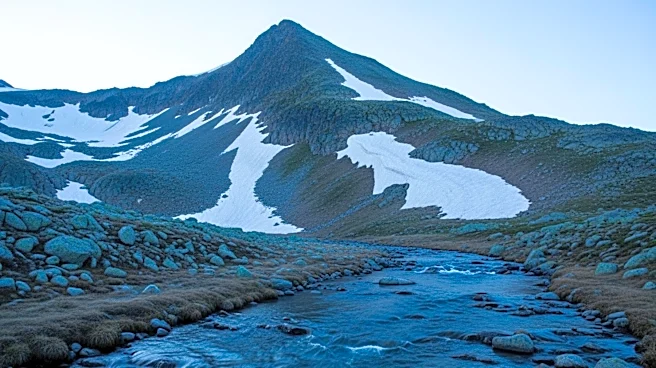
The U.S. Forest Service has reported a significant decline in the snowpack within the Klamath National Forest, with current levels at just 0.8% of the historical average. This dramatic reduction was highlighted
in the May snow survey, which also noted that the Snow Water Equivalent—a measure of the water content in the snow—is similarly low. The survey found that only the highest site in the Middle Boulder Basin still retains measurable snow, while the rest of the area's snowpack has melted despite recent spring storms. These findings are part of the California Cooperative Snow Survey program, which aims to forecast water availability for various uses such as agriculture, power generation, and recreation.
Why It's Important?
The drastic reduction in the Klamath snowpack has significant implications for California's water supply, which is crucial for agriculture, energy production, and maintaining ecological balance. The snowpack acts as a natural reservoir, slowly releasing water as it melts, which is vital for stream flow and water storage systems. A diminished snowpack could lead to water shortages, affecting farmers, energy providers, and communities dependent on consistent water flow. This situation underscores the broader challenges posed by climate variability and the need for effective water management strategies to mitigate potential shortages.
What's Next?
The data collected from the snow surveys will be used by the California Department of Water Resources to inform water management decisions. Stakeholders, including agricultural producers and energy companies, may need to adjust their operations in anticipation of reduced water availability. Policymakers might also consider implementing conservation measures or investing in infrastructure to better capture and store water. Continued monitoring and analysis will be essential to adapt to these changing conditions and to develop long-term strategies for water sustainability.