








What's Happening?
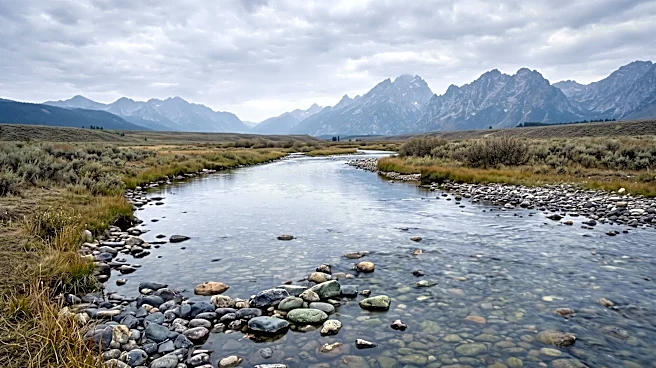
The Wyoming Game and Fish Department (WGFD) has identified Proliferative Kidney Disease (PKD) as the cause of a widespread die-off of mountain whitefish in the Salt River, located between the Salt River Range and the Palisades Reservoir. The disease is triggered
by a microscopic parasite called Tetracapsuloides bryosalmonae. Specialized laboratory tests conducted by the WGFD's Fish Health Lab confirmed the presence of the parasite and its role in the mortality event. This marks the first documented instance of a PKD outbreak causing significant fish mortality in Wyoming, with total fatalities potentially numbering in the thousands. While the Salt River remains open for fishing and recreation, anglers are encouraged to fish in other areas to reduce stress on the river's fish population during this period.
Why It's Important?
This outbreak of Proliferative Kidney Disease in the Salt River is a significant ecological event for Wyoming, representing the first documented instance of such widespread fish mortality due to PKD in the state. The loss of thousands of mountain whitefish can have cascading effects on the river's ecosystem, impacting the food chain and overall biodiversity. Mountain whitefish are an important component of the aquatic environment, serving as prey for larger fish and contributing to nutrient cycling. The WGFD's recommendation for anglers to avoid the Salt River, despite it remaining open, underscores the severity of the situation and the need to minimize additional stress on the affected fish population. This event also highlights the vulnerability of aquatic ecosystems to parasitic diseases, especially when environmental factors like warm water temperatures, which have been linked to PKD outbreaks in neighboring states, may play a role.
What's Next?
The WGFD will continue to monitor the situation in the Salt River closely. While no emergency closures have been implemented yet, the agency may consider them if fish mortality rates continue to threaten the long-term health of the river. Biologists plan to conduct follow-up surveys next year to assess the overall impact on whitefish populations and the ecosystem. Research is ongoing across the region to better understand the relationships between various organisms and the environmental triggers that lead to severe clinical symptoms in fish populations, particularly concerning warm water temperatures. The WGFD also urges recreationists to adhere to 'Clean, Drain, and Dry' protocols for all watercraft and gear between trips and to never move live fish from one body of water to another, to prevent the spread of diseases and invasive species.
Beyond the Headlines
The PKD outbreak in the Salt River serves as a stark reminder of the interconnectedness of environmental health and the potential impacts of climate change. While a direct correlation has not been confirmed, the mention of warm water temperatures as a factor in previous outbreaks in neighboring states suggests a potential link to broader climate patterns. This incident underscores the importance of long-term ecological monitoring and research to understand and mitigate the effects of environmental stressors on aquatic life. It also highlights the critical role of public cooperation in preventing the spread of diseases, emphasizing that individual actions, such as proper cleaning of gear, can have significant ecological consequences. The event prompts a deeper consideration of how human activities and a changing climate can exacerbate natural vulnerabilities in ecosystems, necessitating proactive conservation strategies and adaptive management approaches.