
What's Happening?
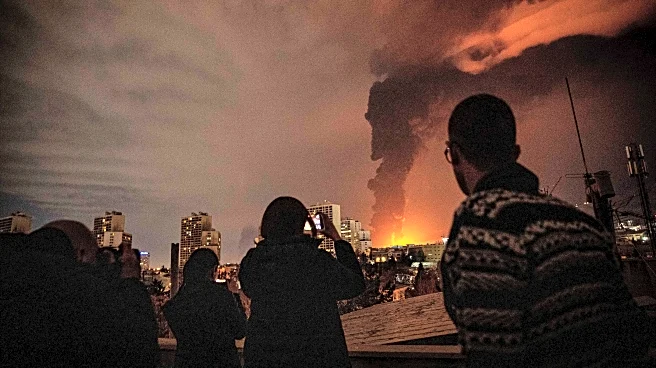
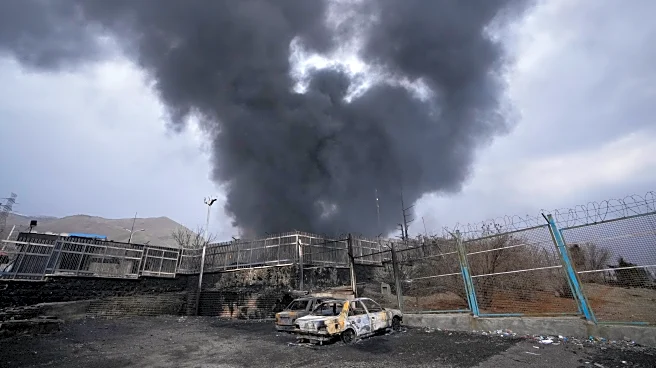
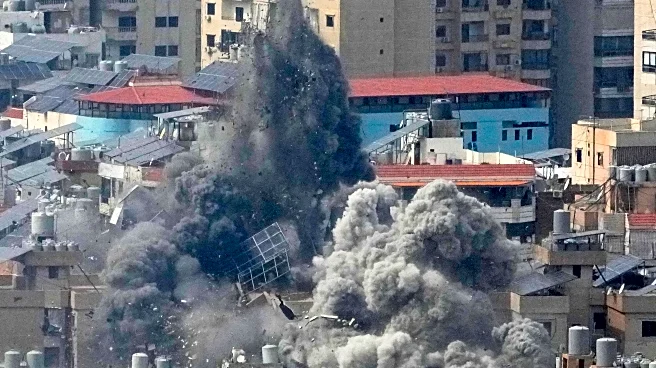
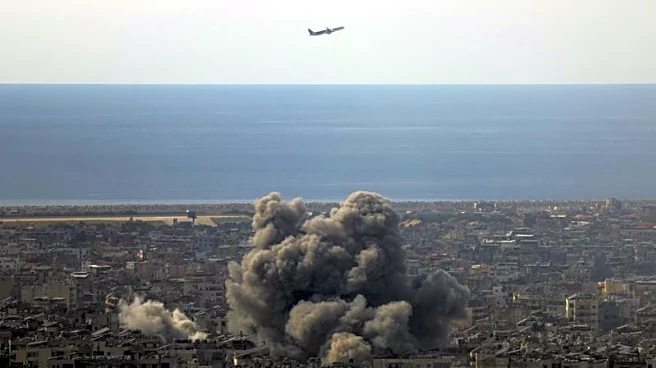
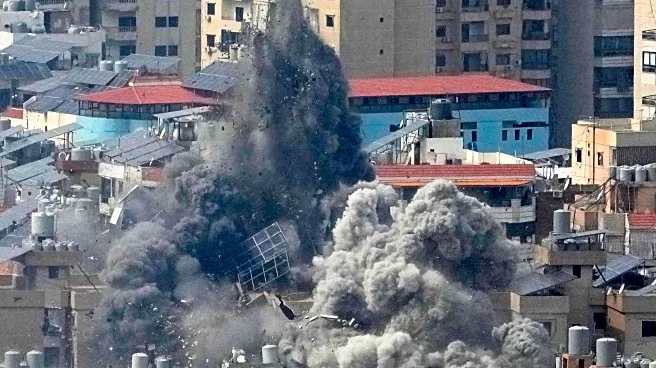
The ongoing conflict between the U.S., Israel, and Iran has resulted in significant casualties, with the death toll in Iran exceeding 1,300 and seven American service members killed. The conflict, which began over a week ago, has led to increased tensions
in the Middle East, with Iran naming Mojtaba Khamenei as its new supreme leader. President Trump has indicated that the war may continue until Iran's military and leadership are dismantled, dismissing negotiations and acknowledging the impact on oil prices.
Why It's Important?
The conflict has far-reaching implications for global stability and economic conditions, particularly affecting oil prices and energy markets. The escalation could lead to further instability in the Middle East, impacting international relations and trade. The U.S. administration's stance on continuing the conflict without negotiations raises concerns about prolonged military engagement and its consequences for American and regional interests.
What's Next?
The situation in Iran is likely to remain volatile, with potential for further military actions and retaliations. The U.S. administration's approach may face scrutiny from Congress and international bodies, potentially influencing future diplomatic strategies. The economic impact, particularly on oil prices, may prompt discussions on energy policy and alternative solutions to mitigate market disruptions.
Beyond the Headlines
The conflict underscores the complexities of U.S. foreign policy in the Middle East, highlighting the challenges of balancing military actions with diplomatic efforts. The situation may influence future policy decisions regarding military engagement and international relations, emphasizing the need for strategic planning and consideration of long-term consequences.