







What's Happening?
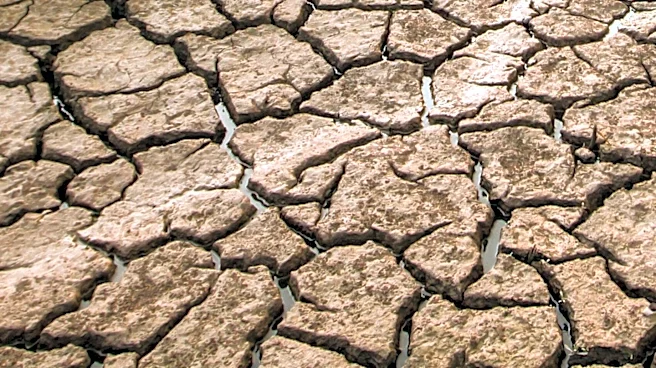
Suzanne Wilkerson, founder of Ambiance Garden Design in Charlotte, North Carolina, is implementing innovative water conservation methods to sustain her landscaping business amidst ongoing drought conditions. Despite recent rainfall, Charlotte remains
under mandatory Stage 2 water restrictions due to below-normal streamflow in the Catawba-Wateree River Basin. Wilkerson, who grew up on a farm, has observed a dip in business due to public nervousness about the drought. To counter this, she utilizes rain barrels to collect and store rainwater for her garden and water features, ensuring pollinators like bees have access to fresh water without relying on city supplies. She also advocates for the use of compost to improve soil moisture retention, reducing the need for frequent watering.
Why It's Important?
The ongoing drought in Charlotte and the Carolinas highlights the increasing vulnerability of local businesses and ecosystems to climate-related challenges. For the landscaping industry, water restrictions directly impact operations and client demand, necessitating adaptive strategies. Wilkerson's proactive approach demonstrates how small businesses can innovate to remain viable while promoting environmental stewardship. Her efforts to conserve water and protect pollinators are crucial for maintaining local biodiversity and ecological balance, which are essential for agricultural productivity and overall environmental health. The broader implication is a call for increased adoption of sustainable practices across industries and households to mitigate the effects of prolonged dry periods and ensure resource resilience.
What's Next?
Charlotte Water has indicated that mandatory Stage 2 restrictions will remain in effect, with the Drought Management Advisory Group evaluating conditions monthly. This means businesses and residents in Charlotte will need to continue adhering to water conservation guidelines for the foreseeable future. Wilkerson plans to continue promoting and implementing water-wise solutions, encouraging other landscapers and homeowners to adopt practices like rain barrel usage and composting. This ongoing advocacy could lead to a wider adoption of sustainable landscaping practices in the region. The situation also suggests that local authorities will need to continuously monitor environmental indicators and adjust policies to manage water resources effectively in the face of changing climate patterns.
Beyond the Headlines
This situation underscores the growing intersection of environmental concerns and economic stability. The drought in Charlotte is not merely an inconvenience but a significant economic factor affecting businesses and potentially influencing consumer behavior towards more sustainable choices. The emphasis on protecting pollinators, even amidst water scarcity, highlights a deeper understanding of ecological interdependence. Wilkerson's personal connection to gardening from childhood also speaks to a cultural shift towards valuing sustainable practices rooted in traditional knowledge. This localized response to a global issue reflects a broader trend where communities are increasingly taking ownership of environmental challenges through practical, everyday solutions.