



What's Happening?
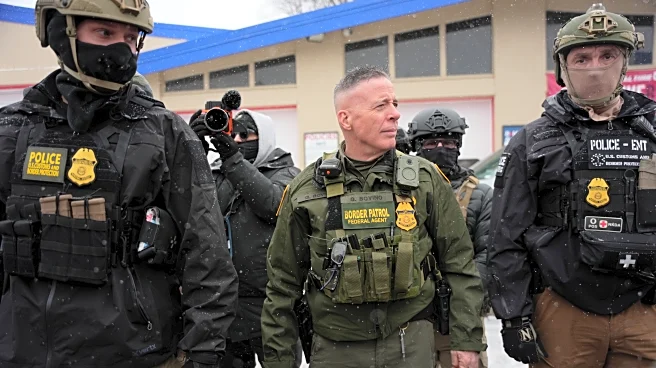
A federal judge in Minnesota has summoned U.S. Attorney Daniel Rosen and other officials to court over alleged violations of court orders related to immigration cases. U.S. District Judge Jeffrey Bryan has accused the federal government of failing to return
personal property to immigrants who were unlawfully detained during Operation Metro Surge. The hearing, described as 'extraordinary,' involved 28 federal immigration cases where the rights of individuals were reportedly violated. Judge Bryan has ordered the officials to explain why they should not be held in contempt for these violations. The belongings in question include identification documents, passports, and personal items. The hearing highlighted tensions between the judiciary and the federal government, with Judge Bryan emphasizing the importance of compliance with court orders.
Why It's Important?
This case underscores the ongoing tensions between federal authorities and the judiciary over immigration enforcement practices. The failure to comply with court orders not only affects the individuals involved but also raises broader concerns about the rule of law and governmental accountability. The situation in Minnesota reflects a national trend where judges are increasingly challenging federal immigration enforcement actions. The outcome of this case could set a precedent for how similar cases are handled across the country, potentially influencing immigration policy and enforcement practices. The case also highlights the strain on the judicial system, as it deals with a high volume of petitions challenging the legality of detentions.
What's Next?
The court has not yet decided whether to hold the officials in contempt, leaving the possibility open for further legal action. If the court decides to proceed with contempt charges, it could lead to significant legal and political ramifications for the U.S. Attorney's office and Immigration and Customs Enforcement (ICE). The case may prompt a review of current immigration enforcement practices and lead to changes in how such operations are conducted. Additionally, the federal government may face increased scrutiny and pressure to ensure compliance with judicial orders in future cases.