





What's Happening?
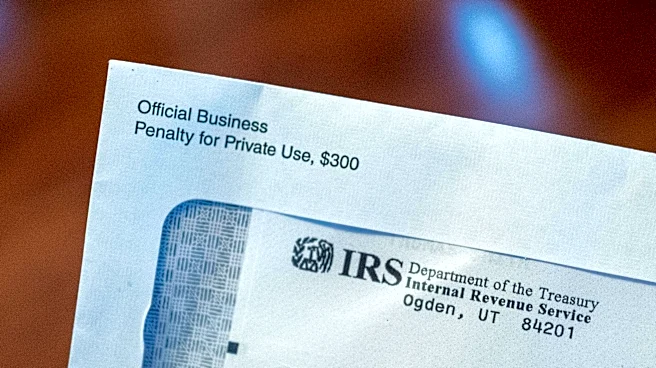
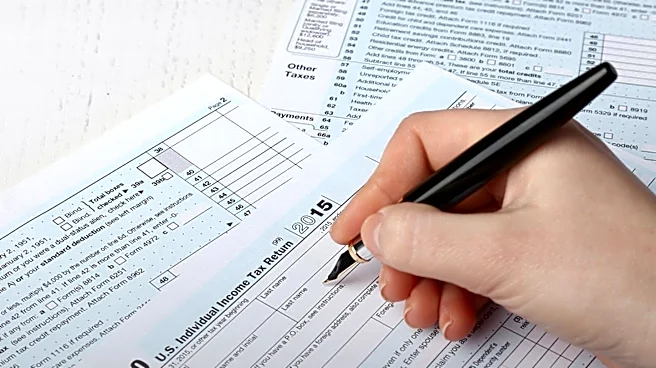
A new law, the 2025 IRS Math and Taxpayer Help Act, mandates that the IRS provide clearer explanations for math-error adjustments on notices sent after November 25 of this year. The law requires the IRS to indicate the specific line on a federal return
where an error occurred and to provide a clear deadline for requesting a tax assessment abatement. However, this reform does not address discrepancies arising from incorrect figures reported by third parties, such as employers, banks, or brokers, to the IRS. Currently, there is no formal process for taxpayers to dispute these third-party figures that includes a mechanism for recording the dispute, assigning responsibility for correction, or setting a response deadline. This issue is becoming more urgent with the advent of digital asset reporting, where new filers may misreport transfers or cost bases, potentially triggering automated IRS notices for additional tax based on unverified third-party data.
Why It's Important?
The absence of a formal 'correction clock' for disputed third-party tax data creates a significant gap in taxpayer protection and administrative efficiency. While the new law improves transparency for IRS-identified math errors, it leaves taxpayers vulnerable to challenges stemming from data they did not originate. This is particularly critical as the IRS increasingly relies on third-party information returns for tax enforcement. Without a clear process for disputing and correcting these errors, taxpayers may face undue burden, potential penalties, and prolonged disputes, even when the initial error is not their fault. This situation can erode public trust in the tax system and disproportionately affect individuals who lack the resources to navigate complex and opaque correction procedures. Establishing a formal process with clear timelines and responsibilities would enhance fairness, reduce administrative backlogs, and improve the accuracy of tax assessments, aligning with principles of good governance and taxpayer rights.
What's Next?
Experts suggest that the IRS should implement a system to acknowledge taxpayer challenges to third-party information returns, assign a case number and owner, and establish a response clock before any tax is assessed based on disputed figures. This system should prioritize material errors and ensure that the IRS does not raise a tax bill solely on a disputed third-party figure without prior verification. The process should also clarify the consequences for filing, payment, and penalties. Furthermore, Congress should consider amending the law to protect taxpayers from late-filing or late-payment penalties attributable to reporter delays when taxpayers promptly challenge and document errors. The IRS needs to show whether each correction was received, rejected, or applied, and retain earlier versions of records. Taxpayers are advised to preserve source records, follow filing instructions, and respond promptly to notices, while reporters should assign a correction contact and confirm delivery of information.
Beyond the Headlines
The challenge of accurately reconciling taxpayer-reported information with third-party data highlights a broader tension in modern tax administration: the balance between efficiency through automated data matching and fairness to individual taxpayers. As digital reporting expands, particularly with complex assets like cryptocurrencies, the potential for data discrepancies increases. The current lack of a structured correction process for third-party errors could lead to a 'guilty until proven innocent' scenario for taxpayers, where the burden of proof falls heavily on them to correct data they did not generate. This raises ethical questions about the design of automated systems and the need for robust human-centric safeguards. A comprehensive solution would not only involve a 'correction clock' but also a re-evaluation of how the IRS handles disputed third-party information, ensuring that technological advancements in tax collection do not inadvertently undermine taxpayer rights or create unnecessary administrative burdens.